


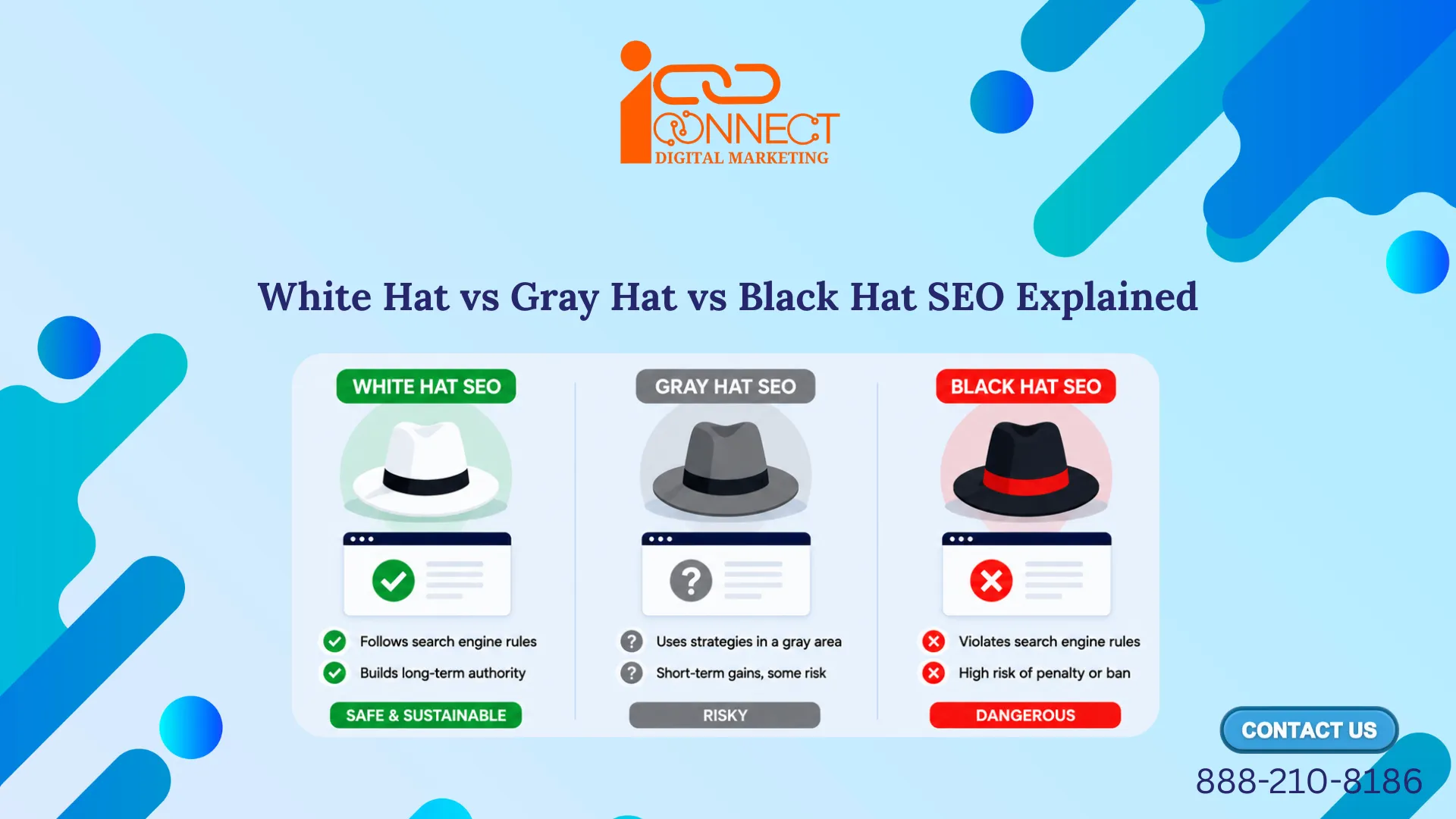
Search engine optimization (SEO) includes many different methods that aim at making the website more visible in search engine results. With the search engine constantly improving their algorithms in order to prioritize the quality human-oriented content. It is crucial to know about various methods that webmasters use. SEO methods can be classified into three techniques. According to their approach to make the website visible among search engine results. The three techniques of SEO are referred to as White Hat SEO, Gray Hat SEO, and Black Hat SEO.
Table of contents
White Hat SEO: When you do White Hat SEO, it means you are following the “rules”. it refers to ethical tactics that follow search engine guidelines. Only focus on delivering a genuine, high-quality experience on providing genuine value to users. This is also known as the safest long-term approach.
Black Hat SEO: Black Hat SEO is when you break the rules to trick the system so you can rank higher on search engines. It uses manipulative techniques that can violate Google’s spam policies. These tactics can produce short-term gains but may result in ranking penalties or removal from search results.
Gray Hat SEO: Gray Hat SEO means using SEO techniques that are between White Hat and Black Hat SEO. These methods can help improve rankings. However, search engines may change their rules and consider them harmful later.
If you want your website to keep doing for a long time White Hat SEO is the best way to do things because it is safe. You should use White Hat SEO if you want to grow your website and keep it growing for a time.
Every website owner wants to achieve a higher rank on Google. The difference exists in how they try to get there. Some earn rankings by creating helpful websites. Others look for shortcuts. A few try to fool Google’s algorithm.
You may also be interested in: 👉 How Does Google Decide Website Rankings?
That’s where these three types of SEO come in.
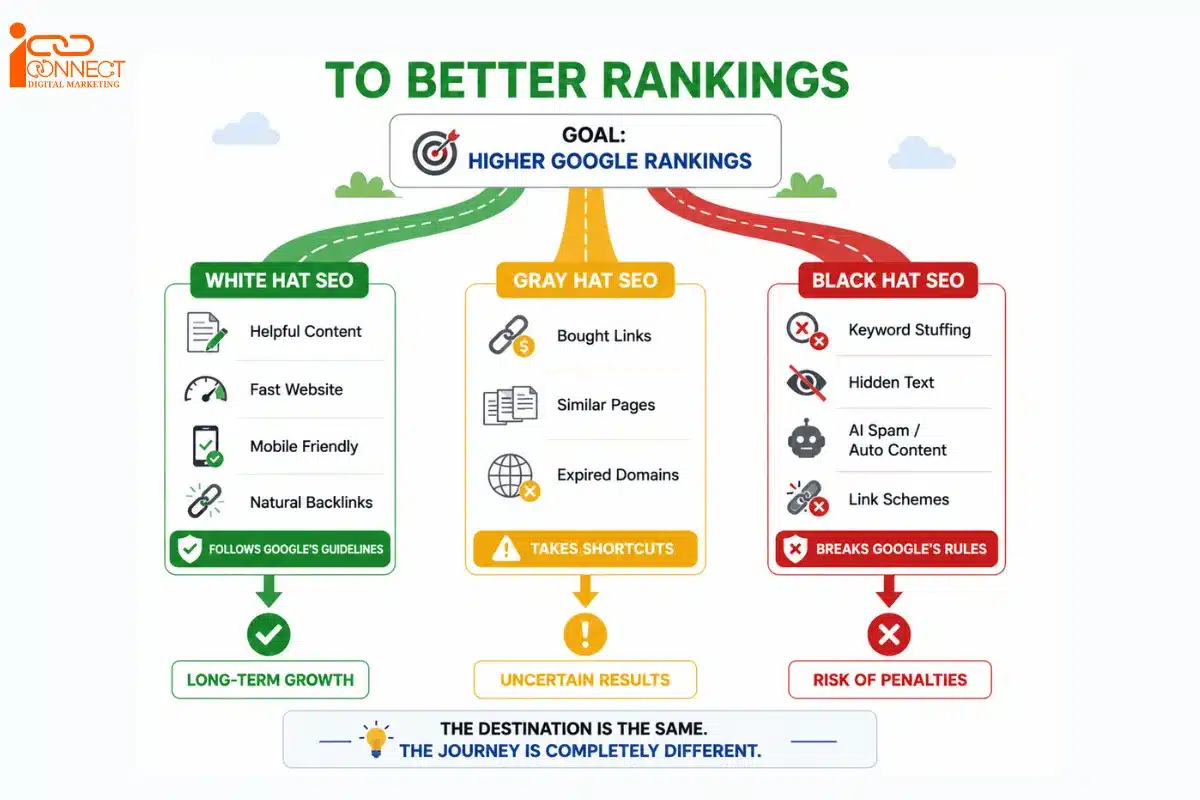
Comparison of white hat, gray hat and black hat SEO approaches and their potential impact on long-term search visibility.
White Hat SEO (The Ethical Approach)
White Hat SEO simply means doing things the honest way. This means you make your website better by following the rules that Google has recommended. You do not try to find a fix. The idea is really simple. You make a website that helps people when they visit. You do not look for a shortcut. You do not try to fool the search engine.
White Hat SEO involves making a website that’s useful to people. You build a website that actually helps the person who visits your page.
Key Principles that fall under White Hat SEO:
- Writing content that’s original and genuinely useful, not copied filler
- Next, improving website speed and accessibility, mobile-friendliness and a secure browsing experience (HTTPS).
- Making sure it opens properly on a mobile phone too
- You should optimize your website or SEO Titles and headings.
- Using titles and headings that make sense at a glance
- Earning backlinks the natural way, simply because your content deserves them
- It is important to include detailed author profiles that demonstrate expertise and credibility.
- Keeping outdated information updated
- Improving navigation and internal linking
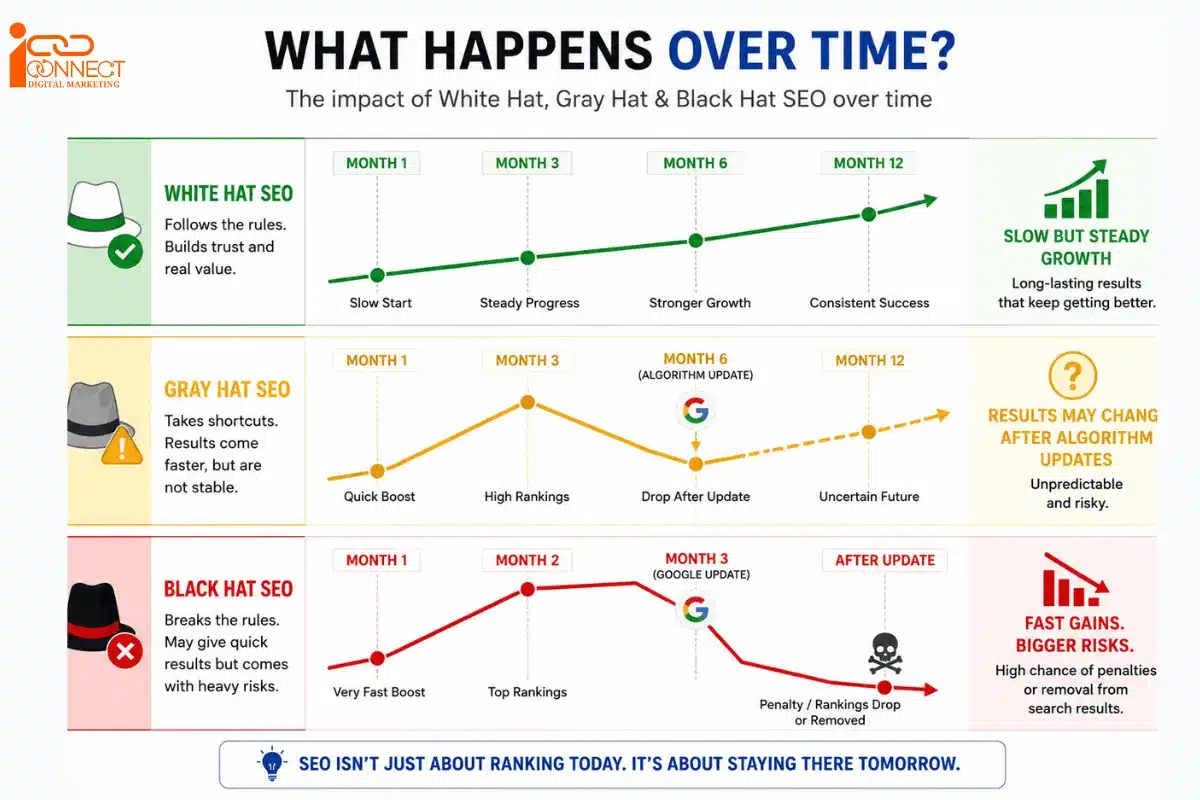
The best part about White Hat SEO is that it lasts. You do have to wait a bit before you see any real change. But once the results come, they stay put — no sudden drop, no disappearing overnight.
It’s like building a house on solid ground. It takes more time to build. But years later, it’s still standing, while the shortcuts around it have already fallen down.
Gray Hat SEO (The Risky Middle Ground)
Gray Hat SEO means using SEO techniques that fall between White Hat and Black Hat SEO. Gray Hat SEO can work, but there’s a catch. What helps you today might stop working after Google’s next update. And rankings can drop just as fast as they went up.
Think of it like taking a shortcut home. It can help you get there today. That same road might be closed tomorrow. That is the risk that comes with Gray Hat SEO. There is a chance it could work well for you now. Things can change quickly. It is not safe or reliable. It can have problems later.
Some examples of Gray Hat SEO Techniques include:
Buying Expired Domains: There are cases where people purchase an old domain since it already has some backlinks and SEO history. Then they use that old domain to redirect it to their website. As they hope of acquiring the same SEO value. The challenge with using old domains is that the old domain could be in a totally different niche, or it could even have spammy backlinks. Rather than depending on an old domain simply for its SEO value, you should develop your site’s own authority.
Aggressive Link Building: Some website owners attempt to obtain numerous backlinks at once by engaging in many link exchanges, purchasing links, or using poor quality sites. This practice is often performed in order to boost their search engine rankings. However, a big amount of unnatural or unrelated backlinks may create an impression that the website is attempting to manipulate its search results. A more effective method would be to acquire natural backlinks.
Private Blog Networks (PBNs): Some people create or control several websites and use them mainly to place backlinks to their main website. For example, they may publish articles on these sites containing links to their main business website. The problem is that these websites are created primarily to manipulate rankings rather than provide value to readers. For safer SEO, build relationships with genuine websites and earn relevant mentions or links.
Excessive Guest Posting: The guest posting process is legal for SEO and marketing purposes when you create an article that will be helpful for the target website. But some people post the same or poor quality articles on multiple websites just to create backlinks. The issue arises when the importance of creating backlinks outweighs the importance of offering useful content.
Gray Hat SEO is the use of tactics that may not necessarily be considered unethical but can be viewed as being manipulative. What makes the technique different from Black Hat SEO is that it falls in the gray zone. This means that whether the tactic is acceptable or not depends on its application and evolution of search engine guidelines.
Black Hat SEO (The Manipulative Approach)
Black Hat SEO uses techniques that intentionally try to manipulate Google’s rankings. The focus isn’t on helping users. It’s on getting rankings as quickly as possible.
Common techniques used in Black Hat SEO techniques include:
- Keyword Stuffing: Keyword stuffing is a practice that involves the repetition of the same keyword several times within a web page just for the purpose of improving its search rankings. This can be done in such a way. For Example: an online shoe store states, “We offer the best shoes. These are the best shoes which are affordable. Purchase the best shoes since these are the best shoes for all.” It is quite clear from the above that the use of the keyword is very unnatural.
- Hidden text: The concept of hidden text can refer to inserting keywords or links which are not visible to the visitors. For instance, a site dealing with shoes could insert keywords like “best shoes, cheap shoes, running shoes, sports shoes” in white color against a white background. This text is invisible to the visitors, but it has been inserted on the web page for search engine ranking purposes.
- Cloaking: Cloaking refers to presenting different content to the search engine and to the visitor. The content presented to search engines could be different from the content presented to the people. For instance, a webpage could present information regarding “healthy eating tips” to the search engines, while to the user who opens that webpage, the content would be advertisements or marketing material. The right thing to do would be to present similar content to everyone.
- Spammy Link Building: Creating or buying backlinks only for the purpose of influencing search engine rankings instead of giving helpful links to users. Like paying other sites to link to your site only to increase its rank.
- Private Blog Networks (PBNs): The practice of PBNs is to create multiple websites. The primary focus is in order to gain backlinks for their primary site and rank it highly on search engines. For example, an organization dealing with laptops may create multiple blogs concerning technology and post links to the primary site from the blogs. This is dangerous since the sites are created only to manipulate rankings.
Using these techniques sometimes produces fast results, but they rarely last. Google often punishes websites that use these methods. In some situations a website can be removed from search results completely. It is like cheating in an exam. You may succeed for a time, but being caught can take away everything.
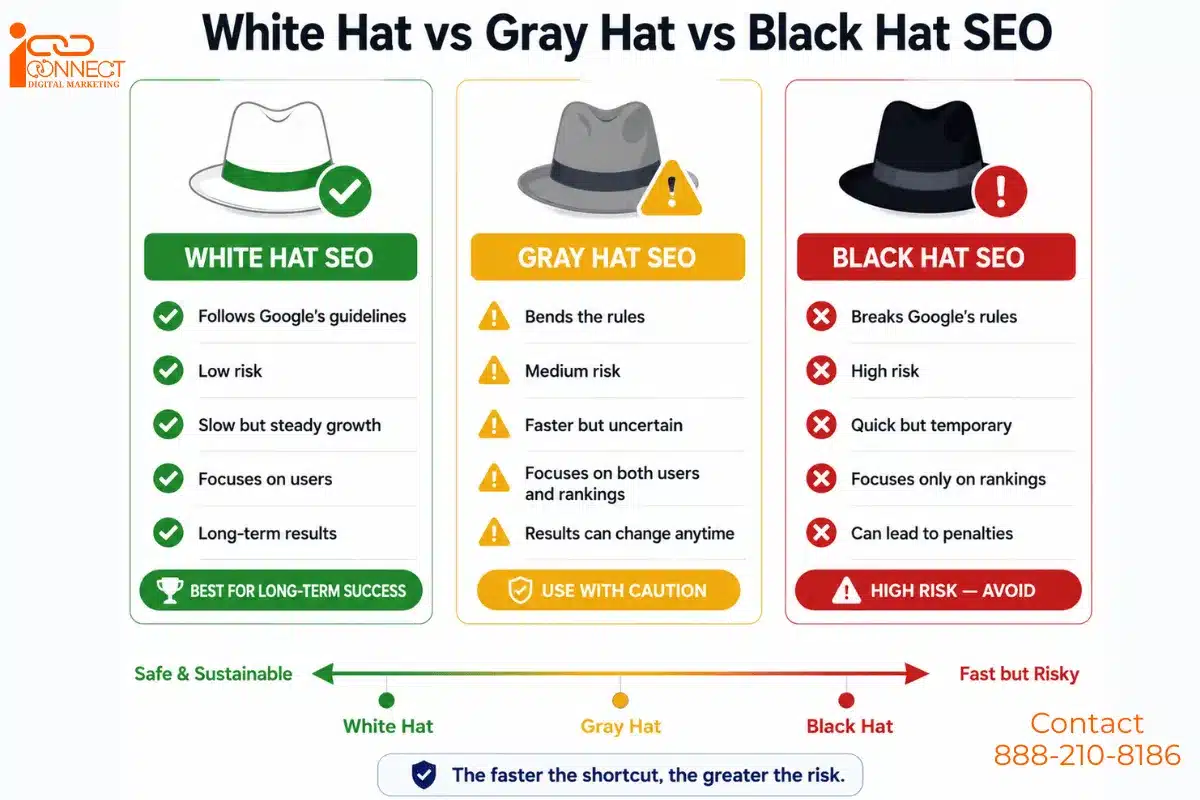
White Hat, Gray Hat and Black Hat SEO differ in their approach, level of risk and use of ranking tactics.
White Hat vs Gray Hat vs Black Hat SEO: Which Should You Choose?
If you are creating a business website or a professional website, ecommerce store, or starting a blog, White Hat SEO is the sensible approach. Gray Hat SEO can look appealing because it gives quick results, but it always has some risk involved. Black Hat SEO is never an idea worth considering, though people use it. A short-term improvement in rankings is not worth the chance of losing the website’s visibility. The better goal is to build a website that actually deserves to be useful and visible for the searches it serves.
A Simple Way to Remember the Difference
Think of SEO like following traffic rules.
- White Hat SEO follows every rule and reaches the destination safely.
- Gray Hat SEO bends a few rules to save time.
- Black Hat SEO drives on the wrong side of the road.
All three may move forward for a while. The difference is how safely they reach the destination — and whether they get there at all.
Want to Learn How SEO Works in Practice?
The differences between White Hat, Gray Hat, and Black Hat SEO can be more easily understood by observing the processes that go into making SEO decisions working on live client projects. As part of the digital marketing course offered by iConnectDM, SEO is taught along with other topics like SEM, PPC, Social Media Marketing, Lead Generation, Content Marketing, Performance Marketing, E-Commerce Marketing, Email Marketing, Marketing Automation, Website Development, Google Business Profile (Local SEO), Web Analytics & Tracking, and AI tools.

Mohit Vij is the Founder & Digital Marketing Trainer at iConnect Digital Marketing Training Hub & Agency (iConnectDM), based in Ghaziabad. With over 9+ years of experience in SEO, Google Ads, Meta Ads, Social Media Marketing, Search Intent, Content Marketing, and Lead Generation.
Over the past years, He has trained hundreds of students, job seekers, working professionals in building successful careers in digital marketing while helping businesses improve their search rankings, website traffic, brand visibility, and lead generation. His insights are based on hands-on industry experience, continuous learning, and proven digital marketing strategies that deliver measurable results.