


In SEO (Search Engine Optimization) a keyword is a word or phrase that people type into search engines like Google to find any information. The particular topic or search intent a webpage is designed to address. On the other and, when people are looking for some information, describing what they want to find or to buy products or services these are called search queries.
For Example:
- If someone searches “best running shoes”, then best running shoes is the keyword.
- If someone searches “how to bake chocolate cake”, then how to bake chocolate cake is the keyword.
A good keyword research helps website owners understand searches like these and create content that genuinely answers what people are looking for. Keywords are useful for any business. But modern SEO is not about repeating a particular phrase throughout a page because then it turns into Keyword Stuffing. The more important goal is to understand why someone searched for something and what information would satisfy that user who is looking for that particular search query.
In this guide, we will explain what is a keyword in SEO, why it matters, and how to use it effectively. In SEO, a keyword is the bridge between a user’s query and the right webpage. If your webpage uses the right keywords, search engines display it to the right audience at the right moment.
For Example: Think of it like walking into a library and asking for “best books on fitness.” The librarian takes you straight to the right shelf — that’s how keywords guide SEO.
If you’re new to SEO, You may also be interested in: What is Search Engine Optimization and How It Works
Keyword Meaning in SEO
The meaning of a keyword is not just about the word itself. It’s about intent. For example:
- If someone types “buy running shoes online”, they want to shop.
- If someone types “benefits of running shoes”, they want information.

Both searches use the term “running shoes,” but the intention is very different. So, when you select keywords for SEO, you must think beyond the word. It is super important to understand the need of what the searcher is looking for.
Keyword vs Search Query: What’s the Difference?
Keywords and search queries are closely related, but they aren’t exactly the same. A search query is the actual phrase a person enters into a search engine. A keyword is the term or topic that an SEO professional or website owner researches and uses to understand those searches.
For example: Target Topic or Keyword: Digital Marketing Course
Actual search queries might include:
- Digital Marketing Course for beginners
- Digital Marketing Course in Ghaziabad
- How long does a Digital Marketing Course take?
- What is taught in a digital marketing course?
This is important since people might have the same need but will ask about it in various ways. It doesn’t mean that there should be a new page each time. One page can cover many similar queries having the same meaning.
You may also be interested in: 👉 What Is Search Intent in SEO and Why Does it Matter?
Why Keywords Are Important in SEO
Keywords are very important in SEO since they help us to understand what our target audience is looking for, the reason for searching, and the type of information that can satisfy their search requirements. The inclusion of keywords within the webpage content is also crucial as these help search engines to comprehend the contents of your site. Without proper keyword placement, no matter how good your website is, it remains unseen.
- Understand Search Demand
- Understand Search Intent
- Attract Relevant Visitors
- Plan Better Content
- Visibility: Keywords make your website show up in search results.
- Traffic: Appropriate keywords bring the right kind of visitors.
- Conversions: If the keyword matches the intent, visitors are more likely to take action or may become your customers eventually (buy, sign up, or call).
Take for example a study done by Ahrefs—it was found that 96% of pages get no traffic from Google (source: https://ahrefs.com/blog/search-traffic-study/). Do you know the biggest reason? It is poor keyword usage.
Types of Keywords in SEO
One of the most common questions people ask is: how many types of keywords are there in SEO? The answer to this, however depends on how you classify them. But here are the main types every beginner should know about: “Before you learn the types, it’s important to clearly understand what is a keyword in SEO.”
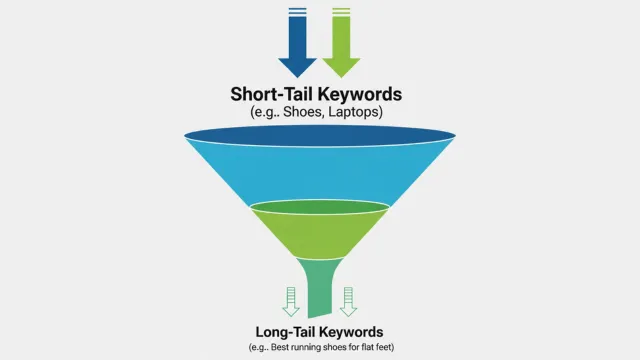
| Keyword Types | Meaning | Example | Best Use Case |
| Short-Tail Keywords | 1–2 words, very broad, high volume but high competition | Shoes, Laptops | Big brands with strong authority |
| Long-Tail Keywords | More than 3 Words Longer, specific, less competition, highly targeted | Best running shoes for flat feet | Small businesses, niche targeting |
| Informational Keywords | Used when people want knowledge or answers | What is SEO keyword | Blog posts, guides, how-to content |
| Navigational Keywords | People search for a specific brand or website | Nike official store | Brand awareness, direct traffic |
| Transactional Keywords | Show buying intent | Buy iPhone 15 online | Product pages, e-commerce sites |
| Local Keywords | Add location with product/service | Digital marketing training in Ghaziabad | Local businesses, service providers |
| LSI Keywords | Related terms/synonyms that give context | Apple (fruit, iPhone) | Support content relevance, context building |
How to Use Keywords in SEO
It’s not enough to just know keywords—you need to place them smartly. Include them in your page titles. Like for example: use “Digital Marketing Services in Ghaziabad” instead of just “Our Services”) and in headings (H1, H2). This helps readers as well as search engines understand what your content is about.

Place them naturally in the content. There is no need to fill the text with keywords, and always write as if speaking to a person. Integrate them in meta descriptions since Google highlights those in results, and add them in image alt text (for example, “red running shoes for men”).
Finally, use internal links. If you write about “types of keywords,” link to another page like “SEO strategy.”
“Let’s see a case: a bakery in Delhi used local keywords such as “birthday cakes in Lajpat Nagar” in headings and image alt texts. By using this keyword strategy, within 3 months, their Google ranking improved. Besides, more walk-ins started coming from nearby areas.”
“If you are confused about what is a keyword in SEO, remember that it’s simply the term people use to find your content.
How Do You Find Keywords for SEO?
Effective keyword research starts with understanding your audience search query rather than opening a keyword tool immediately. Finding the right keyword is like making a shopping list before cooking—without it, you waste time. Here are proven methods:
Step 1: Start With the Audience’s Problem
For example, a business selling running shoes might begin with customer questions such as:
- Which shoes are suitable for beginners?
- Which shoes are suitable for flat feet?
- How should running shoes fit?
- When should running shoes be replaced?
These questions provide useful starting points for research.
Step 2: Use Google Search Suggestions
You can also use Google’s autocomplete suggestions that reveal related searches people make around a topic. You can also examine related questions and searches appearing in search results to understand how people phrase their needs.
Step 3: Use Keyword Research Tools
These important Tools can provide you additional data about potential topics and queries. Some popular tools for keyword research includes:
- Google Keyword Planner
- Moz Free keyword research tool
- Google Search Console
- Semrush
- UberSuggest
- Google Trends
- AnswerThePublic
- Forums and Q&A Sites: Use sites like—Quora and Reddit. These sites show what people are curious about.
- Social Media Hashtags: Check on Instagram or Twitter, hashtags to know trending terms.
- E-commerce Sites: These include platforms like Amazon show what products people search for. If you sell “organic honey,” check Amazon autocomplete for variations.
“At iConnectDM, we also guide students in our Digital Marketing Course in Ghaziabad on how to use these tools effectively.”
How Do You Choose the Right Keywords?
Here are some Steps to Choose the Right Keywords Before choosing a keyword.
Understand your audience: We should understand what our customers want to know or buy from their search queries on search engines like Google.
Brainstorm Seed Keywords: We should start with broad topics related to our business. For Example: If anyone selling fitness equipment, their seed keywords might include: Dumbbells, Treadmills, Resistance bands etc.
Research keyword data: Use Keyword research tools to find Monthly Search Volume, Keyword difficulty, Search intent, and Related keyword ideas.
Understand search intent: Choose keywords that match search intent of users that they are looking for in terms of Informational, Navigational, Commercial, Transactional.
Prioritize Long-Tail Keywords: If you are starting, long-tail keywords are good. Example: “best yoga classes for beginners in Noida.”
- If you are starting, long-tail keywords are good. Example: “best yoga classes for beginners in Noida.”
- If you are a strong brand, short-tail or high-volume keywords can work.
- For local shops or service providers, local keywords are the best.
Check Your Competitors Ranking: You should always first looking for the keywords on which similar websites like your competitors are ranking on. This can reveal opportunities you may have missed.
Case Study: A Local Gym’s Keyword Strategy
“A Ghaziabad gym struggled to gain members until they used local long-tail keywords like “affordable gyms in Ghaziabad” and “ladies fitness classes near me” instead of broad terms. They also published blogs with informational keywords like “benefits of weight training for women.” In just six months, their organic traffic rose by 45%, and membership inquiries increased by 30%. This proves the right keywords can drive real growth.”
“This example shows why knowing what is a keyword in SEO can directly impact real business growth.”
What Is Keyword Stuffing?
Keyword stuffing is the practice of overusing the same keyword or phrase on a webpage in an attempt to manipulate search engine rankings. It makes the content unnatural and difficult to read, and search engines may rank such pages lower.
❌ Bad Examples (Keyword Stuffing):
Example 1: Targeted keyword: Best Coffee Maker
If you are looking for the best coffee maker, our best coffee maker is the best coffee maker because this best coffee maker makes the best coffee maker coffee. Buy the best coffee maker today if you want the best coffee maker.
Example 2: Targeted keyword: Digital Marketing Course
Our digital marketing course is the best digital marketing course because this digital marketing course teaches digital marketing course skills better than any other digital marketing course.
✅ Good Example (Natural Keyword Usage):
Example 1: Target keyword: Best Coffee Maker
Choosing the best coffee maker depends on your budget, brewing preferences, and the features you need. For example, some models include programmable timers, while others focus on making espresso or specialty drinks. Reading reviews and comparing features can help you find the right option for your home.
Example 2: Targeted keyword: Digital Marketing Course
Our digital marketing course covers SEO, Social Media Marketing, Email Marketing, Ecommerce Marketing and Paid Advertising. The lessons include practical projects to help beginners build real-world skills.
Where Should You Use Keywords in SEO?
You should place your primary SEO keywords in strategic parts of your webpage to help search engines understand your content.
- Page Title (Title Tag) : Include your primary keyword in the page title, preferably near the beginning.
- URL: We should always use a short, descriptive URL that includes the main keyword.
- Main Heading (H1): Your H1 should clearly describe the page and include the primary keyword.
- First Paragraph: Mention your primary keyword naturally within the first 100 words.
- Subheadings (H2, H3): Use keywords or related phrases in subheadings where relevant.
- Body Content Area: Use the keyword naturally throughout the article and include related terms and synonyms.
- SEO Title & Meta Description: We should include our Keywords in Meta Title and Meta Description
- Image Alt Text: Describe the image accurately and include the keyword only if it’s relevant.
What Are The Best Practices for Keyword Usage
- Always check search intent before using a keyword.
- Avoid keyword stuffing — it makes content unreadable.
- Use a mix of keyword types: informational for blogs, transactional for product pages, and local for businesses.
- Update your keyword list regularly. Trends change. If you noticed, during COVID-19, searches for “online yoga classes” spiked.
In Conclusion,
“So, now you know what is a keyword in SEO and how it connects search intent with your business goals.” You can think of keywords in the SEO world as billboards along a busy road. It’s not that people won’t see your website, they just can’t find it without the keywords. Using proper keywords is like putting signs on the road to drive traffic to your site. Ultimately, it comes down to recognizing what your keywords mean, who they appeal to, and where to place them. Done right, they’ll bring the visitors you want. The best keywords appeal to user intent and business objectives. Don’t consider keywords as just normal words, they’re the bridge to your customers.
Frequently Asked Questions:
Yes. While keyword importance is relevant in SEO in 2026, there have been some changes in terms of what search engines need to see on websites in order to rank well. Nowadays, search engines understand search intent, context, and topic relevance far better than they did before.
There is no specific number of keywords for a webpage. For SEO purposes, concentrate on relevancy and search intent instead of concentrating on the number of keywords. An optimized webpage should be focused on a single primary keyword, which reflects the whole idea behind the topic, in addition to some secondary keywords and their synonyms.
Wrong targeting of keywords might not only attract the wrong audience but also decrease the quality of your website traffic and conversions. If your content is ranked for keywords that are irrelevant to what users are looking for, then the amount of leads or sales generated through those keywords will be minimal.
It is ideal to choose a mix of both search volume and competition. High search volume keywords may generate high traffic but can be tough to rank for, whereas low competition keywords will be easy to rank for and generate quality traffic. Both high and low keyword strategies should go hand-in-hand.
Yes, an image can be ranked with a keyword in the search results, particularly on Google Images. The following are some of the things that can be done to make an image appear in a higher ranking by use of keywords: optimize the filename, alt text, caption, and surrounding text with the right keywords.
No, each page must be optimized for a unique primary keyword, depending on its particular subject matter and objective. The use of the same keyword on more than one page could lead to keyword cannibalization, where the pages would compete against each other within the search engines.
“If you want to master SEO completely, don’t miss our Digital Marketing Course in Ghaziabad.”

Mohit Vij is the Founder & Digital Marketing Trainer at iConnect Digital Marketing Training Hub & Agency (iConnectDM), based in Ghaziabad. With over 9+ years of experience in SEO, Google Ads, Meta Ads, Social Media Marketing, Search Intent, Content Marketing, and Lead Generation.
Over the past years, He has trained hundreds of students, job seekers, working professionals in building successful careers in digital marketing while helping businesses improve their search rankings, website traffic, brand visibility, and lead generation. His insights are based on hands-on industry experience, continuous learning, and proven digital marketing strategies that deliver measurable results.