

Search intent in SEO is the main reason or purpose behind a Google search. That’s the thing which you want to look for and not simply a phrase that you typed into the search engine. Any search always has an intent behind it whether someone wants to learn something, visit a specific website, compare products, or make a purchase and that’s what you are supposed to understand before everything else as part of SEO.
Sometimes, the Search Engine Result Page (SERP) might show results that aren’t relevant to what the searcher wanted. The reason for such divergence is failure to understand the intent behind the search.
Search intent is often also referred to as user intent, keyword intent, or query intent. While these terms might sound different, all of them denote the same concept – identifying the reason for which people use search queries rather than just identifying the keywords themselves. Usually, this happens due to several possible interpretations of the same phrase or incorrect interpretation of the intent itself. This is why recognizing the search intent is an essential SEO concept.
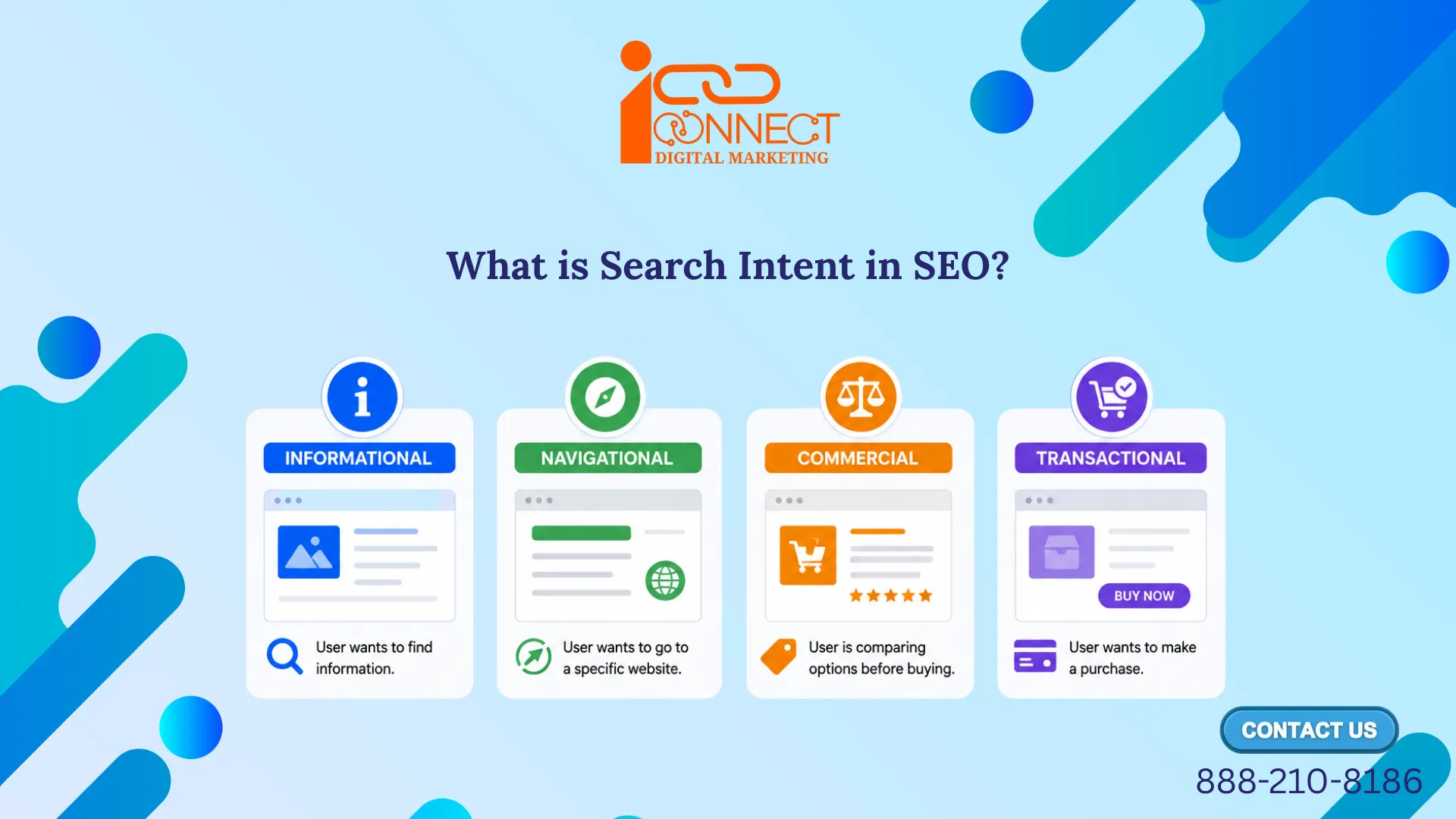
Also, there are four key types of search intents; Informational, Commercial, Transactional and Navigational. Once you understand this single concept, most other SEO concepts will make more sense.
Why should you care about Search Intent?
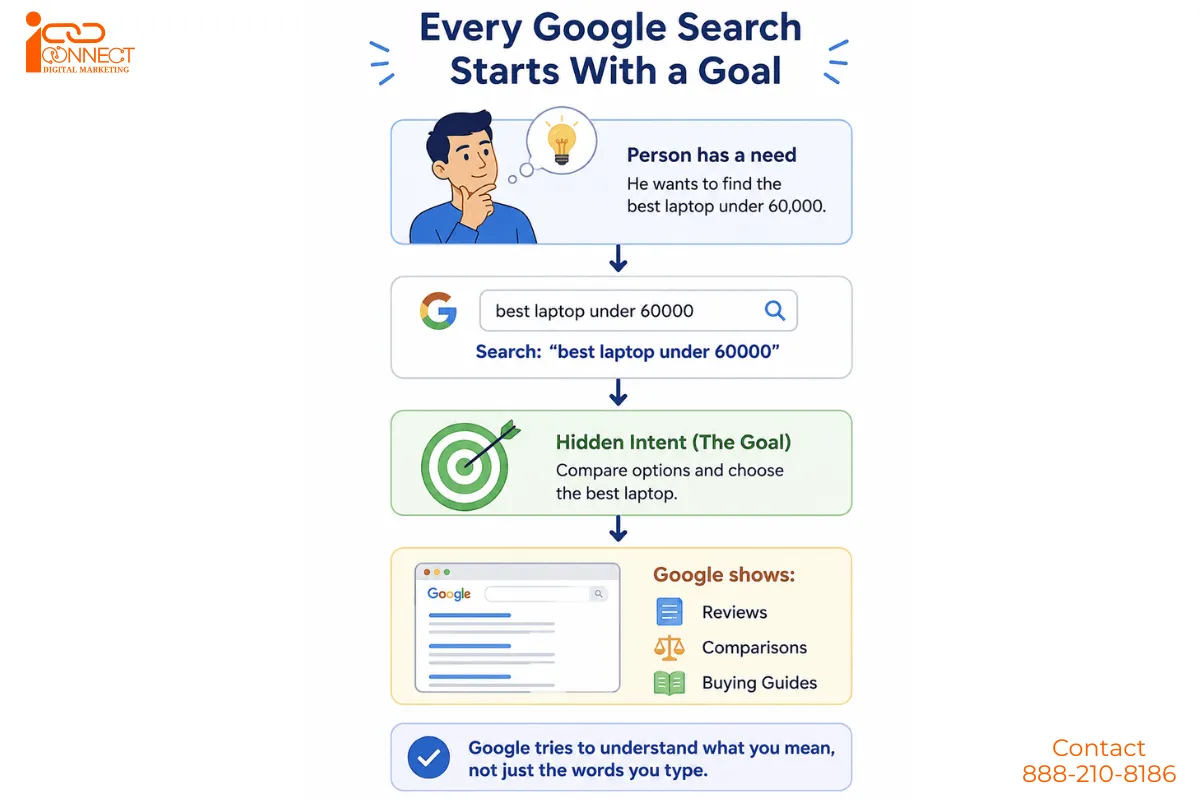
Google’s goal is to provide the most helpful answer for every search. It doesn’t simply match keywords; it tries to understand what the searcher is actually looking for. However, even the best content will not matter if it does not provide answers to the visitors’ queries. The customers will land on your website realizing that there is not the greatest solution they were looking for and they will leave your website immediately.
Let us understand from a good example, if someone is searching “How to clean a laptop screen” so that the user expects clear instructions. On the other hand, some other user searching for “buy laptop screen cleaner” is having an intention to purchase a product. Although both searches mention laptop screens, the intent behind them is completely different. So, that means the first step for you should be understanding the search intent before writing any content or choosing any Keywords.
You may also be interested in: 👉 What is a Keyword in SEO?
How Search Intent Changes During the User Journey
A person’s search intent often changes as they move from learning about a topic to making a decision.
For example, someone interested in getting information about SEO, he/she might search like this:
- What is SEO?
- How does SEO work?
- Best SEO course
- SEO Course fees
- Enroll in an SEO course 2026
These initial searches are called information searches since the consumer is seeking information. The later searches will be transactional once the consumer is ready to make the purchase. Once you know which stage your audience is at, you can craft relevant content.
The Four Main Types of Search Intent (With Examples)
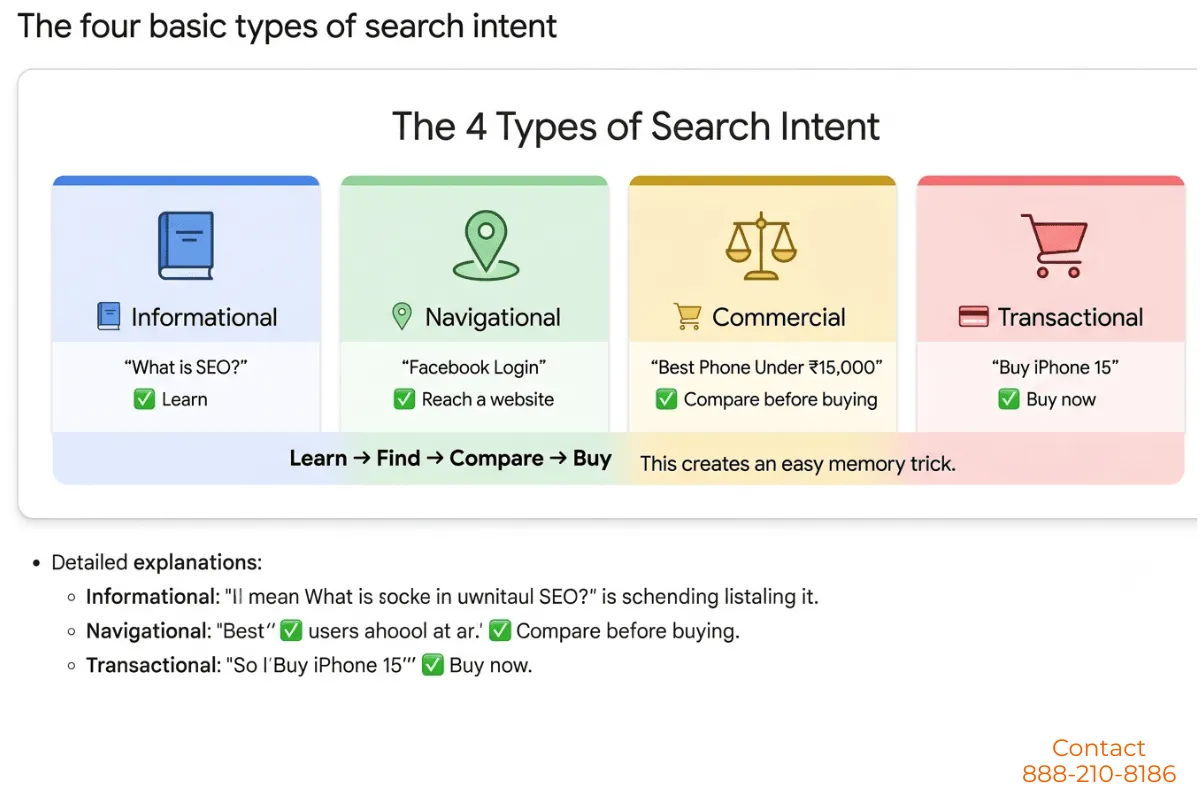
1. Informational intent: It is a type of search or user intent where the person just wants to learn something about a topic, understand something, or find an answer, rather than buy a product or navigate to a specific website.
For Example:
- What is SEO?
- What is AI-powered SEO?
- How to Build Good Habits?
- What is Prompt Engineering?
- “How Does Rain Form”
2. Navigational intent: A type of search intent where the user wants to reach a specific website, webpage, app, or online destination. The person already knows where they want to go. They’re just using a search engine as short cut.
For Example:
- “Facebook login”
- “YouTube Studio”
- “Gmail”
- “Canva”
- “Amazon customer service”
3. Commercial intent: Commercial intent (also called commercial investigation) is a type of search intent where the person is researching products or services thinking about buying something, but hasn’t decided yet. They are not ready to buy immediately, but they are evaluating, checking, weighing options options.
For Example:
- “Best budget phones under 15000”
- “nike vs adidas running shoes”
- Which email marketing tool is best?
- Top AI tools for content creation
- Best laptops for programming
4. Transactional intent: A type of search intent where the user is ready to take a specific action, usually making a purchase, signing up, downloading, booking, or subscribing. The user has already decided what they want and is looking for a way to complete the action.
For Example:
- Buy iphone 15 online
- order pizza near me
- Book a digital marketing course
- Subscribe to Netflix
- Purchase domain name
How to identify the intent behind a search
Here’s a simple tip. Read the search query out loud and figure out what would make this satisfy this person in the next 10 seconds.
When someone searches for “how to prepare paneer at home,” they need a recipe but not a brand of paneer. On the other hand, when someone looks for “purchase paneer online,” they need a shop, not a recipe.
Sounds obvious once you say it out loud. But a surprising number of websites get this backwards, writing sales pages for people who just wanted information or writing long blog posts for people who just wanted to buy something quickly.
A Quick Way to Check Intent Yourself
Type your target keyword into Google and just look at what’s already ranking.
- If the top results are all blog posts and guides, that’s informational intent.
- If you see product pages and “buy now” listings, that’s transactional.
- If you see comparison articles and review sites, that’s commercial intent.
Google has already done the guesswork for you. The results page is basically a cheat sheet.
You may also be interested in: 👉 How Does Google Decide Website Rankings?
Common Question: Does One Keyword Have Multiple Search Intents?
Yes, one single keyword can have multiple search intents. This is known as mixed or hybrid intent. A single search query may represent different goals depending on the user’s context, experience level, location, or stage in the buying journey.
Search engines usually identify the dominant intent by analyzing what most users want and what types of pages rank for that keyword.
How to Handle Multiple Search Intents in SEO?
In SEO, a single keyword can sometimes have multiple search intents. This means different users may search the same keyword but have different goals. Some users may want to learn about a topic, while others may want to compare products or make a purchase.
1. Check the SERP
2. Target the dominant intent
3. Cover secondary intents naturally
Why Search Intent Matters More Than Keyword Usage
You could stuff your page with the “right” keyword and still fail if the content doesn’t match what people wanted when they typed it. An online recipe blog’s rank for “buy paneer online” will not last longer despite good usage of keywords because Google will ultimately lower its ranking because people click, don’t find what they wanted, and bounce straight back.
Matching the intention means that you have been given a question to be answered instead of discussing a topic that is related but not exactly what was asked for.
Common Mistakes When Matching Search Intent
Matching search intent is one of the most important parts of SEO. A page can have great content and strong backlinks, but if it does not satisfy what users are looking for, it may struggle to rank and convert.
Here are common mistakes marketers make:
1. Creating Content Without Checking SERPs
2. Targeting the Wrong Intent Type
3. Ignoring the User’s Funnel Stage
4. Focusing Only on Keywords, Not User Problems
5. Ignoring Search Intent Changes Over Time
6. Overloading a Page With Multiple Intents
7. Not Matching Content Format
8. Ignoring SERP Features
9. Not Updating Content Regularly
A simple way to remember Search Intent
You can think of the search intent like entering a store and asking a question. If the question you are asking is “where is the milk,” you don’t want a lecture on dairy farming. You just want directions. Provide exactly what the search is looking for or what people are asking, in the way they expect it, and all other aspects of SEO become easy.
That’s basically the whole concept in a nutshell. Understand the requirement of the searcher and provide exactly what is required.
Frequently Asked Questions:
Search intent in SEO is about the purpose of conducting a search by the user. This allows businesses to know what information or product the user is looking for through their searches on the Internet. Through this, businesses can create content according to the search intent to increase ranks and conversions.
Explain the types of search intent and how to apply them in SEO strategies?
There are four primary types of search intent: Informational, Navigational, Commercial, & Transactional. Informational is learning queries, Navigational is finding specific websites, Commercial is comparisons, & Transactional is taking action such as making a purchase. SEO efforts should be crafted around different content types based on the type of search intent.
Search intent matters because search engines rank content based on relevance and how well it addresses user needs. Understanding search intent assists SEO professionals in developing relevant content, targeting appropriate keywords, lowering bounce rates, increasing ranks, and boosting conversions, while providing desired answers or solutions.
There are several ways to learn about search intent search intent in SEO via SEO classes, blogs, and tutorials that can be found on sites such as Google Search Central, HubSpot Academy, Semrush Academy, Ahrefs Academy, and Moz.
You can Identify search intent by looking at keyword phrases, search modifiers and Google results. See if the ranking pages are blogs, product pages or compare articles. Other SEO tools offer keywords. Matching the content type, format and user expectations is key to better targeting keywords.
In Short
Search intent is the reason behind every search query. Before creating content, identify whether users want information, a specific website, product comparisons, or to complete an action such as making a purchase. Matching your content to that intent improves the user experience and increases the likelihood that your page satisfies what searchers are actually looking for.
Want to Learn SEO Step by Step?
Understanding search intent is one of the first building blocks of SEO, but it’s only one part of creating content that performs well in search results. To build a complete SEO strategy, you’ll also need to understand keyword research, on-page SEO, technical SEO, content optimization, internal linking, and how Google evaluates websites.
If you’re looking for structured, practical training instead of learning from scattered online resources, our Digital Marketing Course covers SEO from the fundamentals to advanced concepts with hands-on practice, real-world examples, and guidance on applying these techniques to actual websites.
Whether you’re a student, business owner, freelancer, or marketing professional, the course is designed to help you develop practical SEO skills that you can use confidently.
Learn more about our Digital Marketing Course and explore the complete curriculum to see if it’s the right fit for your learning goals.

Mohit Vij is the Founder & Digital Marketing Trainer at iConnect Digital Marketing Training Hub & Agency (iConnectDM), based in Ghaziabad. With over 9+ years of experience in SEO, Google Ads, Meta Ads, Social Media Marketing, Search Intent, Content Marketing, and Lead Generation.
Over the past years, He has trained hundreds of students, job seekers, working professionals in building successful careers in digital marketing while helping businesses improve their search rankings, website traffic, brand visibility, and lead generation. His insights are based on hands-on industry experience, continuous learning, and proven digital marketing strategies that deliver measurable results.