


Search engines refer to websites and online tools which assist you in searching for what you need on the internet. The search query (also called a keyword or search term), is based on inputting a search term, and the search engine will display the most relevant web pages within seconds. That’s how your textbook defines a search engine.
Table of Contents
But here’s what’s actually happening behind that simple search bar. The internet doesn’t come with a table of contents. There is not some big library where every webpage is sorted and tagged. Instead, Google, Bing, Yahoo and search engines like them spend every single moment crawling, categorizing, assessing-billions of web pages so they’ll find just the page that can answer your question at high-speed.
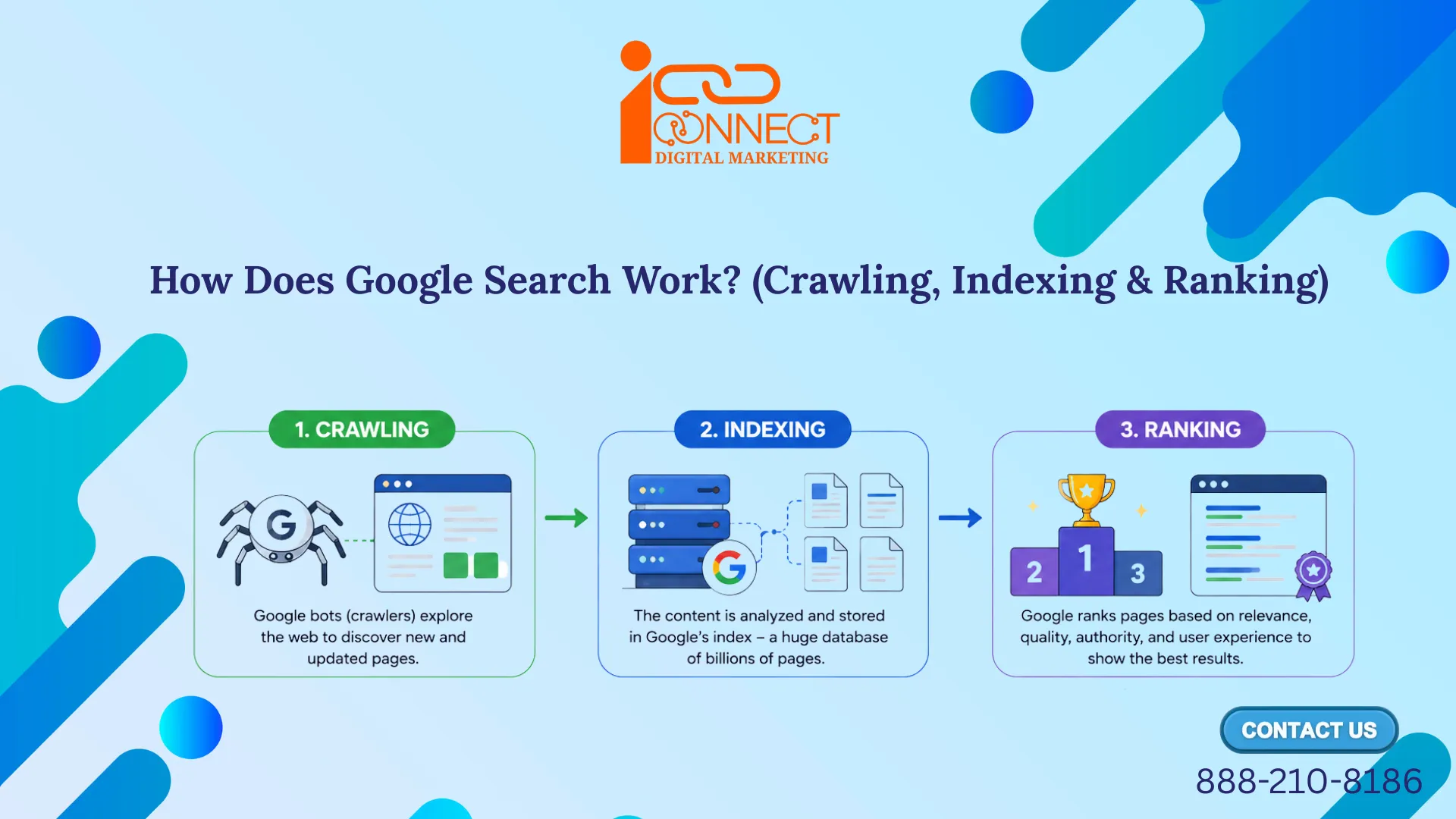
To make this possible, search engines follow three major stages: crawling, indexing, and ranking.
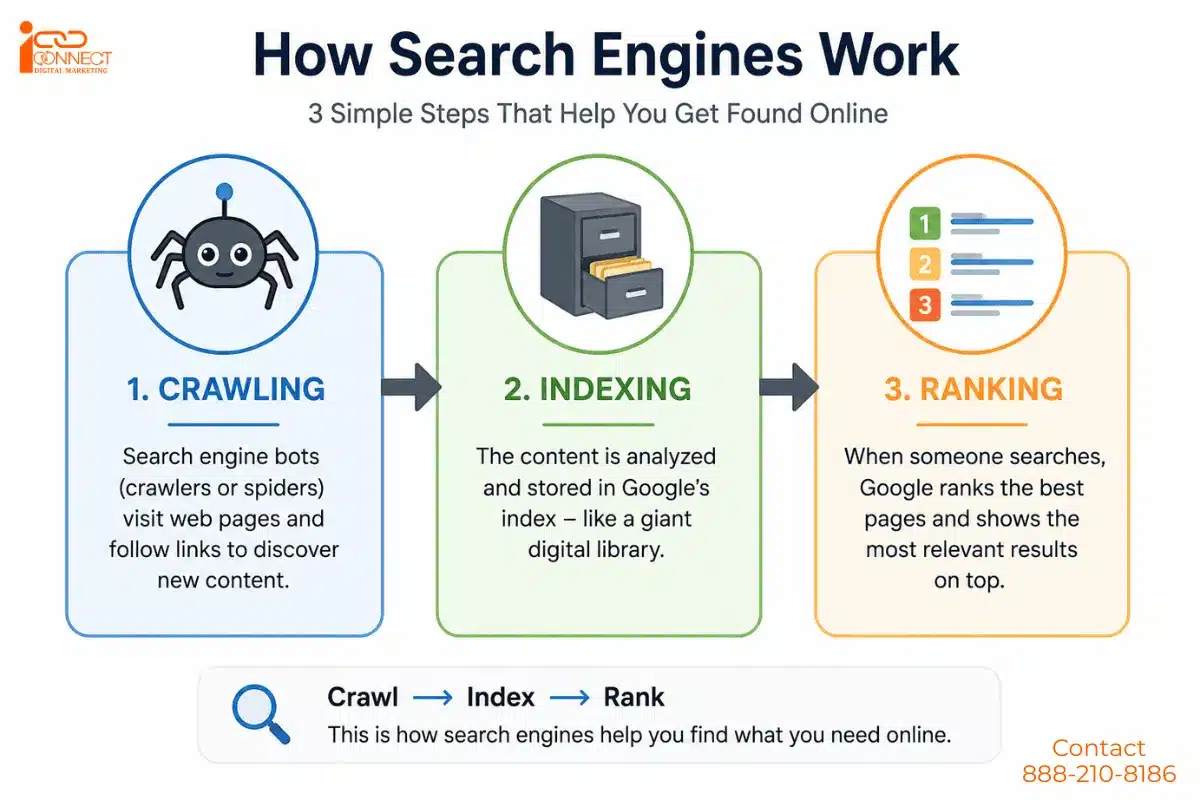
Understand how search engines work by learning the three essential stages—crawling, indexing, and ranking—that determine how web pages appear in Google Search results.
You may also be interested in: 👉 What Are AI Crawlers and Bots? How They Discover, Collect, and Process Web Content
Stage 1: Crawling — Exploring Phase (Web Pages)
The first step is crawling.
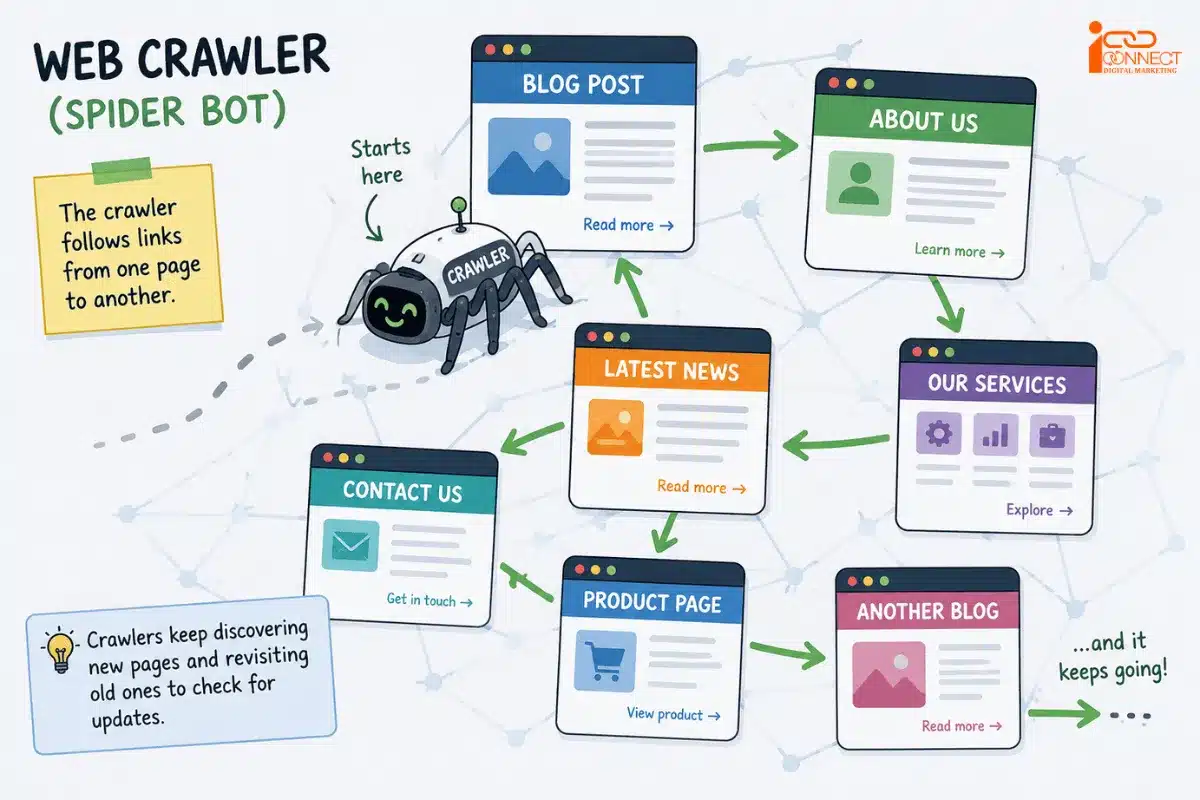
Search engines send out little programs called “crawlers” (also called “spiders” or “bots“). The job of crawlers is to travel across the internet, page by page, link by link.
Imagine you’ve just published a new blog post and the crawler just landed on it. The crawler reads your page. It looks at the text, images, and links. When it finds a link, it follows it to another page. On that page, it finds more links and follows those too. This creates a chain of discovery across the web.
The crawler never really stops. It keeps moving from one page to another. It also comes back to pages it has visited before. This helps it check if new content has been added or old content has changed.
However, it’s important to understand that finding a page doesn’t automatically mean it will appear in Google Search. Crawling simply means the search engine has discovered the page.
Stage 2: Indexing — Organizing Information Phase
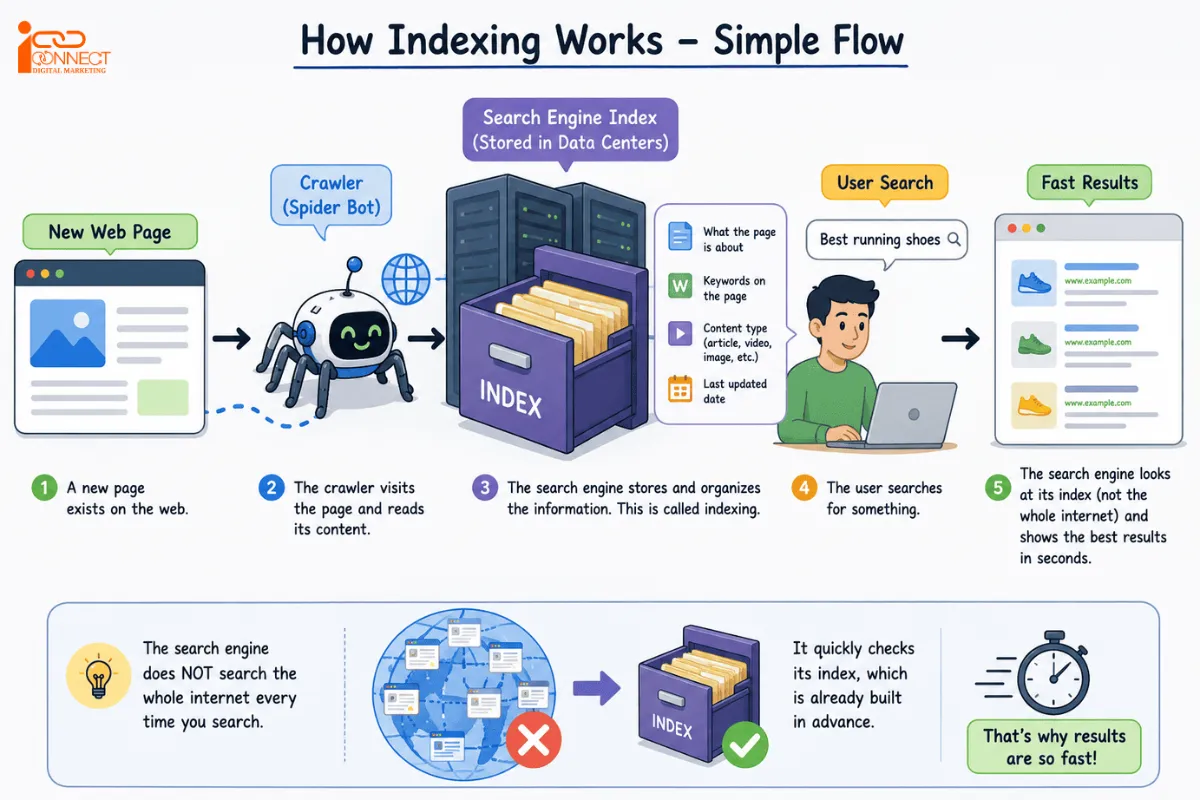
Every time the crawler gets information about the web page, it sends that information to the search engine, where it is stored. This is called indexing.
Indexing can be compared to building an enormous library catalog. Each web page is assigned a separate record. Information that the search engine needs to know regarding the content of the page is stored, including what the page is about, keywords used in the content, and whether it is textual, pictorial, or video content, among others.
All of this information is stored in large computing facilities known as data centers. As the data is pre-saved, the search engine does not need to search the entire internet each time you type anything. It just needs to search through its own index and show you the best results within seconds.
It’s worth noting that not every crawled page gets indexed. Search engines may choose not to index pages that are duplicates, contain very little useful information, or don’t meet their quality standards.
Stage 3: Ranking — Choosing the Best Results
Once a page has been indexed, the next step is ranking. Here comes the exciting part. Every time you use Google for searching anything, there can be many web pages that are associated with your search.
But then comes the question — How does Google select which pages will show up on top of the search results?
Google uses a process known as ranking. Google ranks all those web pages based on which ones are the most useful for your search.
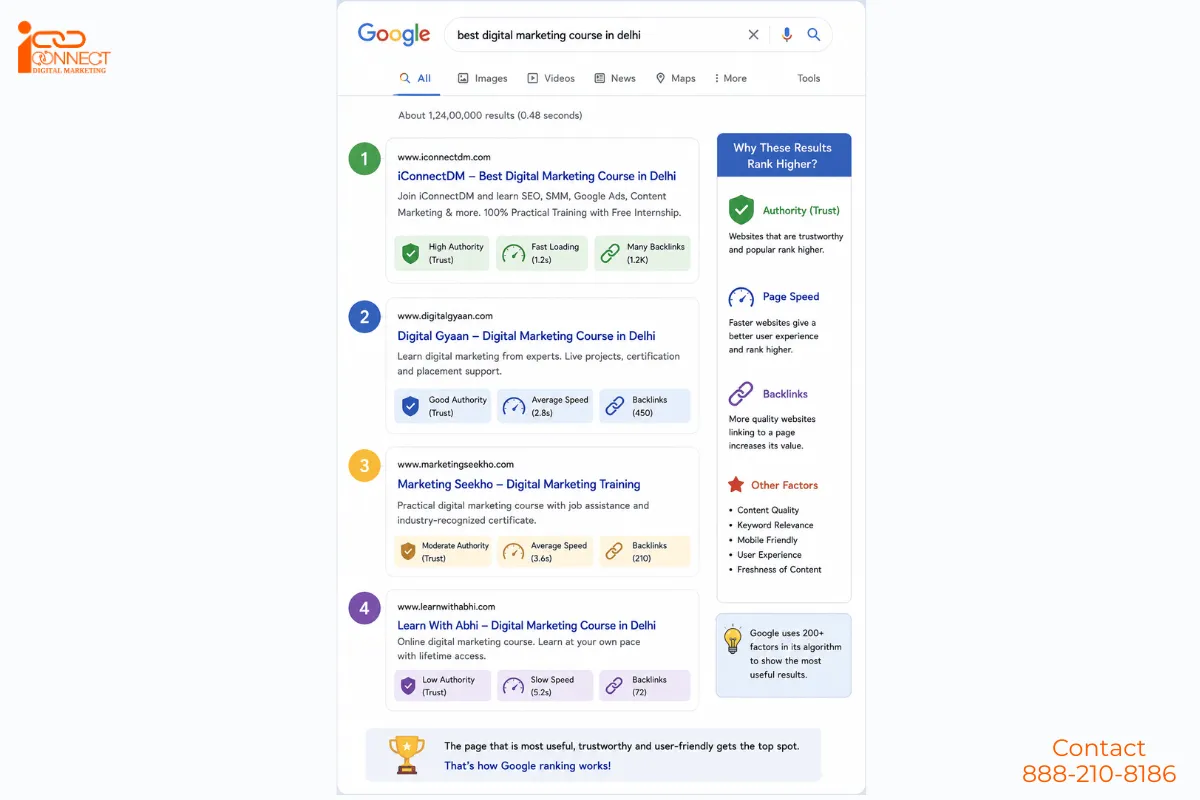
To do this, it follows a set of rules called algorithms. These algorithms look at many factors before deciding where each page should appear in the search results.
- How closely the content matches your search
- How trustworthy and credible the website is
- How many other reputable websites link back to the web page
- How fast the web page loads and its performance on mobile devices
- When the web content was last updated
Although every search engine has its own ranking systems, they all share the same objective: to provide users with the most relevant, accurate, and helpful answers as quickly as possible.
How Search Engines Understand Your Search
Modern search engines do much more than simply match keywords. They try to understand the meaning and intent behind your search.
For example, if you search for “Digital Marketing Course,” Google understands that you’re probably looking for the Training Institute or Educational Institution rather than information about anything else. Likewise, a search for “best running shoes for beginners” is understood as a request for recommendations, not just pages containing those exact words.
This ability to understand context helps search engines deliver results that better match what users actually want.
Putting It All Together
So, what happens when you search on Google?
- A crawler has already found the webpage.
- Google has already saved it in its index.
- When you type your search, Google checks that index.
- It picks the pages that best match your search.
- In less than a second, you see the results.
Isn’t that pretty amazing?
However, there’s a thing that most people are unaware of. Finding web pages is easy. It’s the other task of choosing the best web page that’s challenging. Google relies on hundreds of different criteria to determine that, and those criteria change all the time.
So, if you have ever thought why one website ranks #1 while another ranks #10, then this is exactly what we are going to talk about next. Understanding how search engines work is the foundation of SEO. Once you know how pages are discovered, indexed, and ranked, it becomes much easier to understand why some websites appear at the top of search results while others struggle to gain visibility.

Mohit Vij is the Founder & Digital Marketing Trainer at iConnect Digital Marketing Training Hub & Agency (iConnectDM), based in Ghaziabad. With over 9+ years of experience in SEO, Google Ads, Meta Ads, Social Media Marketing, Search Intent, Content Marketing, and Lead Generation.
Over the past years, He has trained hundreds of students, job seekers, working professionals in building successful careers in digital marketing while helping businesses improve their search rankings, website traffic, brand visibility, and lead generation. His insights are based on hands-on industry experience, continuous learning, and proven digital marketing strategies that deliver measurable results.