

Local SEO helps the businesses to get discovered by people searching around for nearby products, services, and locations. It focuses on showing your business to those who are looking to purchase, at the same time when they are searching for you. It is particularly important for businesses that depend on customers within a specific geographic area.
In addition, Local SEO plays an important role for businesses like smaller shops, clinics, gyms, restaurants, service-oriented businesses, and other forms of businesses as they rely heavily on local customers. Local search is growing with a very high speed in 2026 after the influence of Artificial Intelligence. In 2026, artificial intelligence is changing how people are discovering businesses. Conversational queries, AI Overviews, AI Mode, and more are enhancing the ways in which businesses are being found via search.
However, the fundamentals of local SEO remain important: businesses still need accurate information, relevant content, a well-maintained Google Business Profile, a strong reputation, and a technically accessible website.
In this article, you will know about:
- What local SEO is
- Why Local SEO Matters in 2026
- Key Components of Local SEO
- How AI Is Changing Local SEO in 2026
- How AI is defining local search in 2026
- Practical local SEO strategies you can use today
- Practical tips you can use now
What Is Local SEO?
Local SEO: Local SEO is the process by which you can optimize and improve your business’s online presence so that it can be discovered by people searching for relevant products or services within a particular geographic area.
Rather than aiming for global or national searches, local SEO focuses for search queries that are location-oriented, such as:
- “best bakery shop near me”
- “dentist in Sector 50 Noida”
- “Thai massage near Gurgaon”
- “plumber open now”
- “gym near Sector 18 Noida”
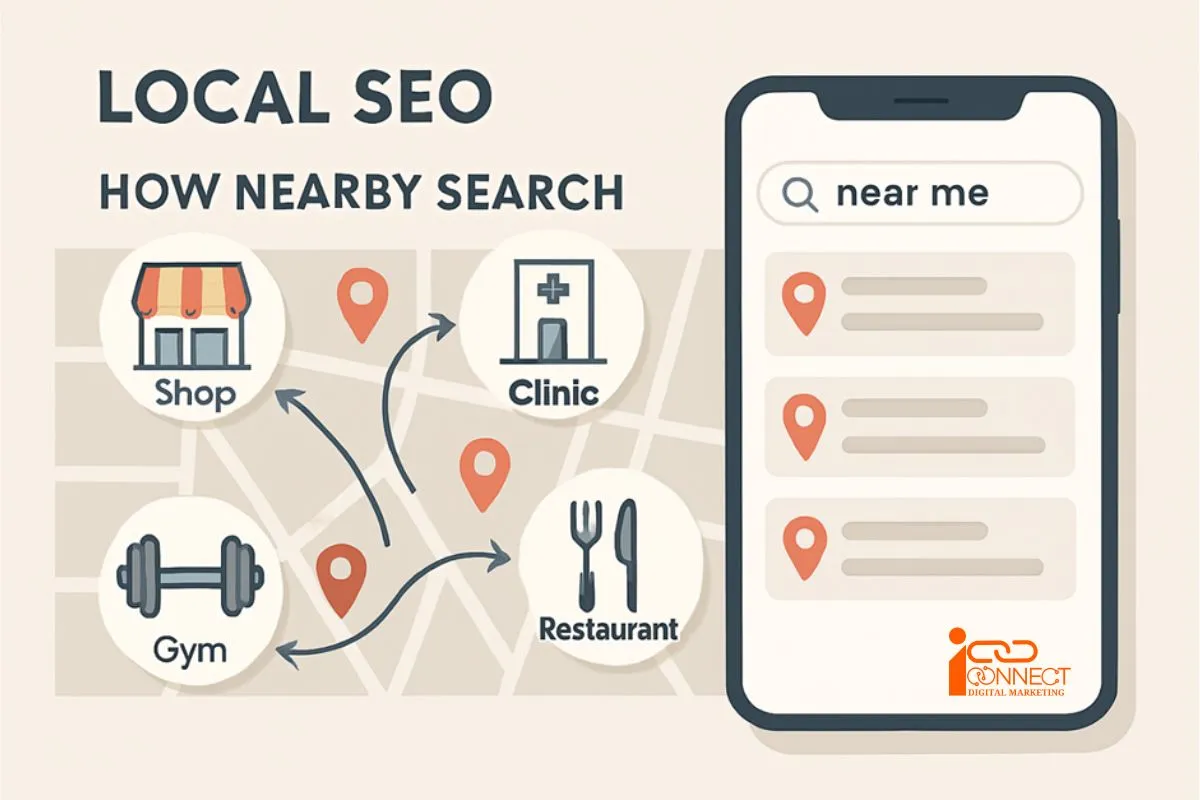
Local SEO commonly includes things such as:
- Optimization of Your Google Business Profile (GBP)
- Using local keywords such as—city names and neighbourhoods
- Getting local reviews
- Creating useful local and service-related website content
- Targeting relevant city, neighbourhood, and service-area searches
- Building relevant local links and mentions
- Maintaining consistency of NAP (Name, Address, Phone number), also called as citations, on the web.
Today, almost halfway of all the amount of Google search inquiries have local intent. This means users expect to find businesses near them. So at the end our objective is not simply to include location keywords on a website. A strong local SEO strategy helps search engines and potential customers understand what a business offers, where it operates, and why it may be relevant to a particular local search.
Why Local SEO Matters in 2026
In 2026, local SEO is no longer optional. As a result, local SEO has now become an important part because people regularly use search engines like Google and Google maps when they need nearby products, services, or places.
Someone searching for “best digital marketing training institute near me,” for example, may have a much more immediate need than someone conducting general research about a digital marketing institute.
Here are some of the main reasons local SEO matters:
1. Local Searches Can Have High Commercial Intent
If a person searches such as “near me,” “open now,” a specific location, or a particular service can indicate that the searcher is evaluating nearby options. They are looking for a visit or looking to contact you today — not in a month.
Important: For businesses, appearing at the right time and at the right point in this search process will be able to create more opportunities for calls, bookings, website visits, direction requests, and in-store visits.
2. Mobile and voice search growth as Search Is Becoming More Conversational
Nowadays, people are using their mobile phones and voice search more often. Because of this, they don’t always type just 2–3 keywords. Instead, they search by asking a complete question, just like they are talking to another person. So Voice and mobile searches make conversational queries are becoming more common.
They can ask detailed questions such as:
- “Where can I find a café near me with Wi-Fi and outdoor seating?”
- “Which dentist near Sector 50 is open on Sunday?”
- “Where can I find a vegetarian restaurant near this area?”
So, searches like “best coffee shop for work near me” are rising rapidly day by day from the people who are looking for local results. So, when creating content, we should focus on answering real questions in a natural and conversational way, rather than only targeting short keywords.
You may also be interested in: 👉 What is a Keyword in SEO? A Beginner’s Guide
In simple words:
People are searching more like they talk, so our content should also be written in a way that naturally answers the questions people are asking.
3. Local Visibility Helps Customers Discover Businesses (Better Visibility = more foot traffic)
As we all know, Google Search and Google Maps helps people discover nearby businesses based on what they are looking for and where the businesses are located. As a result, people often choose the top local results or the business listed on maps. More visibility leads to more calls, visits, and sales.
Therefore, a complete and 100% accurate online presence makes it easier for customers and search engines to understand important information of businesses such as their services, location, opening hours, contact details, Primary Category that they deal with.
4. Reviews Influence Local Discovery and Customer Decisions
Many consumers look at reviews prior to purchasing. Favorable local reviews help boost the local algorithms so that your site will be picked by users. Google also states that review count and review scores are among the factors that can contribute to local search ranking. Reviews therefore have both a reputation-management role and potential local-search value.
According to research, mobile searches conducted locally have experienced considerable growth, and as a positive effect of this, businesses with strong local SEO often see better engagement and revenue as a result.
Businesses should focus on earning genuine customer reviews and responding professionally rather than attempting to manipulate ratings.
You may also be interested in: 👉How Does Google Decide Website Rankings?
Key Components of Local SEO
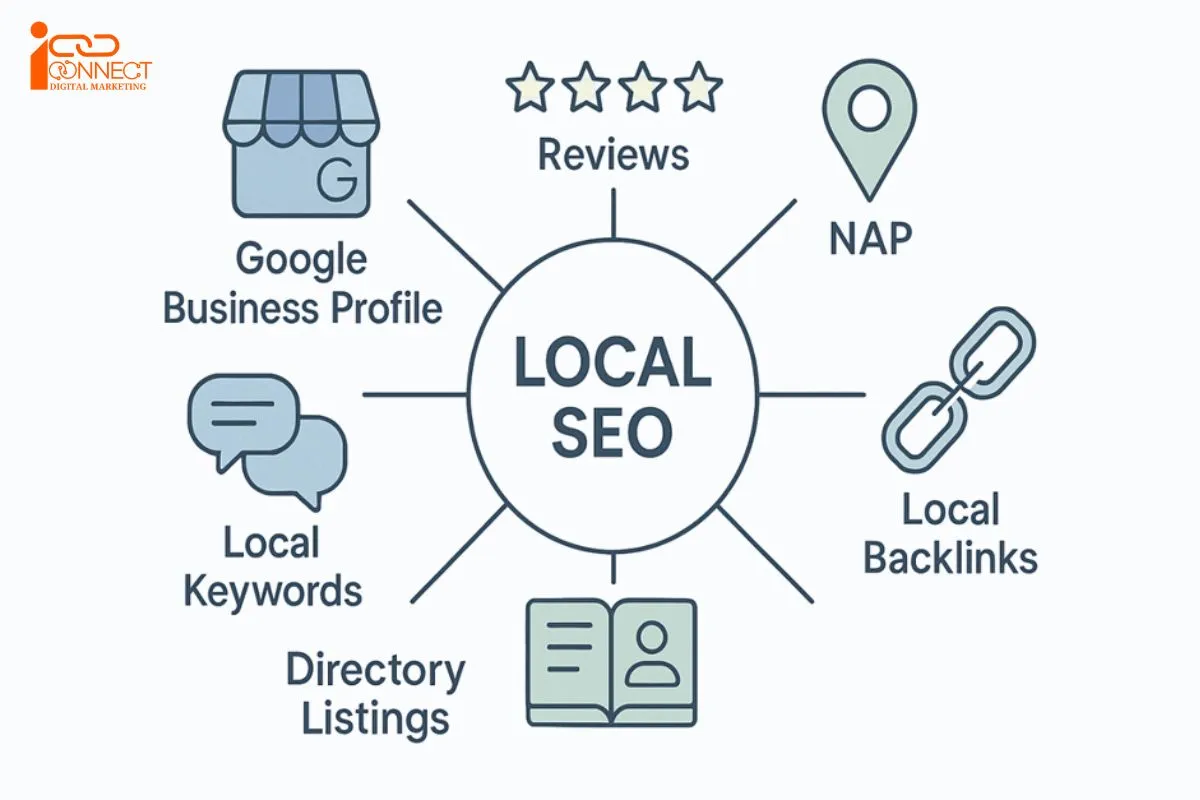
Local SEO is built upon several interconnected elements that help search engines and customers understand who you are, what you offer, and where you are located. These are:
Google Business Profile Optimization
Google Business Profile is key to success for local searches. It includes:
- Business name
- Address or service area
- Phone number
- Opening hours
- Website
- Business category
- Products or services
- Photos
- Reviews and business responses
- Other relevant business attributes
It is important for all businesses to keep this information accurate and current. It is also important to select primary and secondary categories that reflect an accurate description of their operation instead of adding irrelevant categories in order to target more searches. Fully optimized GBP listings show up in local packs, maps, and also AI search results.
Local Keywords and Content
Local content should reflect how customers actually search for a business’s products or services. Use keywords that reflect local intent such as:
Examples include:
- “Best dentist in Noida”
- “AC repair in Ghaziabad”
- “Italian restaurant in Gurgaon”
- “coworking space near Sector 62”
Relevant searches can combine:
- Product or service + location
- Business type + city
- Service + neighbourhood
- Product or service + “near me”
- Problem + location
Content that answers common local questions — like “best electricians in Ghaziabad” — helps both local SEO and AI search visibility.
Reviews and Ratings
Search engines look at reviews as signals of trust. Local SEO today prioritizes review quality and volume. Responding to reviews improves your credibility and local visibility.
Citations and Business Listings
Citations are mentions of your business information like its name, address, and phone number which is also named as NAP on popular directories like Yelp, Justdial, and local portals. Consistent citations strengthen your local SEO foundation.
These mentions may appear on:
- Industry directories
- Local business directories
- Professional associations
- Local websites
- Business listing platforms
Local Links
The presence of backlinks from local news portals, blog sites, as well as other business sites in the community, helps in indicating relevance and authority to the search engines.
Potential sources of legitimate local links include:
- Local news publications
- Industry associations
- Chambers of commerce
- Community organizations
- Business partners
- Event websites
- Relevant local publications
The goal should be to earn relevant links because the business is genuinely connected to the local community or industry—not to manufacture links solely for ranking purposes.
Local SEO vs Traditional SEO
Local SEO focuses on specific geographic results, while traditional SEO aims for broad, non-location-specific visibility.
For example:
• Traditional SEO: “best SEO company in India”
• Local SEO: “seo company in Noida”
Local SEO relies more heavily on location data, reviews, maps, and local intent signals than traditional SEO.
You may also be interested in: 👉 What is Search Engine Optimization and How It Works?
How AI Is Changing Local SEO in 2026
Artificial Intelligence is not a buzzword; in fact, it has already affected the way and means by which search engines work. Local SEO is changing in several important ways due to artificial intelligence.
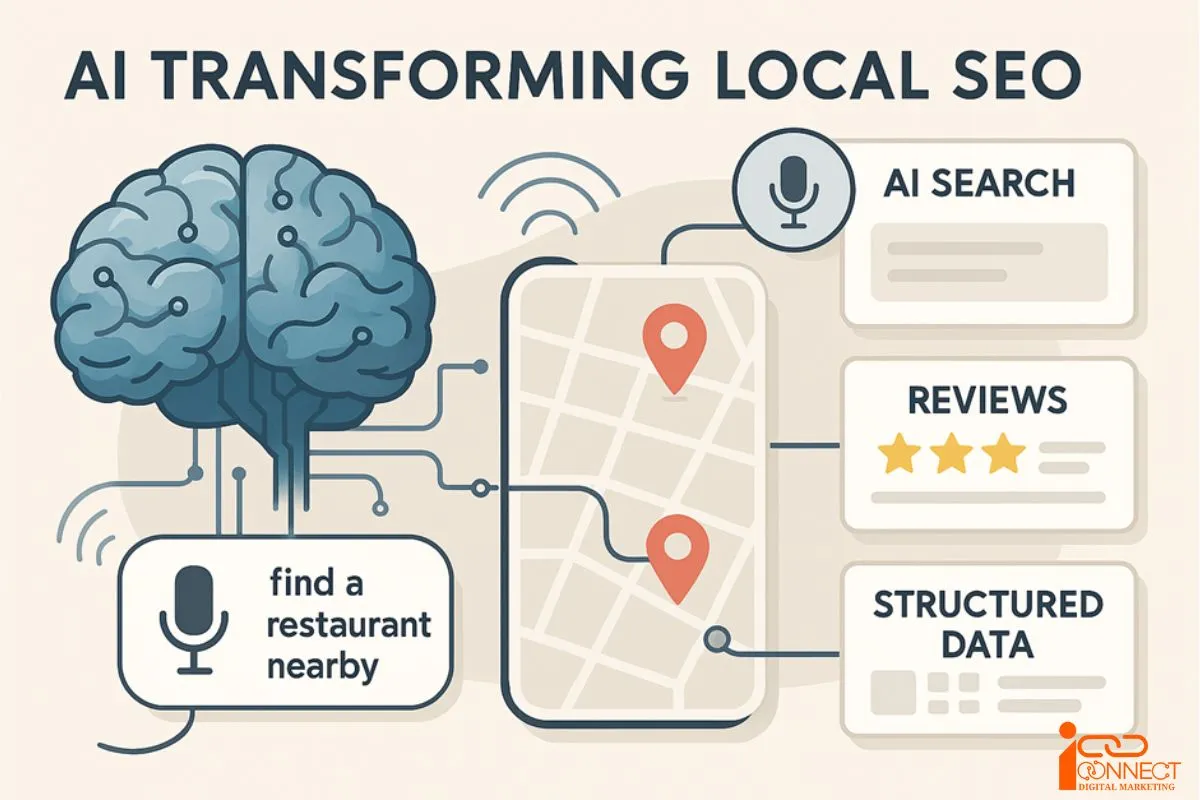
1. Search Queries Are Becoming More Conversational and Complex
Search engines now understand conversational queries more accurately. Users no longer type short keywords. They ask questions like:
For example:
- “Where is the closest salon that is open now?”
- “Affordable pizza near Sector 18 with outdoor seating”
- “Find a family-friendly restaurant near me with vegetarian options”
AI helps search engines comprehend these phrases, which means your content needs to be written like humans talk — not how marketers used to write keywords.
You may also be interested in: 👉 What Is Google AI Mode and How Does It Work?
2. Voice Search Is Growing Local Intent
Voice assistants like Google Assistant, Siri, and Alexa are used for local searches more often — especially on mobile. Voice search uses full sentences, not short keywords. Research suggests that over three-quarters of local searches may happen through voice by 2026. To capture the local voice search result, your content should directly answer the usual spoken questions.
3. AI Powering Google Local Packs and Overviews
AI now powers more search features, including AI Overviews and AI Mode results for local queries. These summaries often draw from multiple sources like reviews, map listings, and structured data.
This means local SEO isn’t just about ranking in the traditional “map pack” anymore — it’s about being cited correctly in AI-generated answers.
4. AI Personalization and Predictive Search
Local search is now highly personalized. AI uses past search behaviour, location history, and patterns to predict the probable intentions of the particular user and what they want. This pushes localized search results corresponding to particular preference patterns of users instead of generalized relevance.
Example: If someone often searches for vegetarian restaurants, AI-driven local SEO needs to reflect that preference within your content.
5. Structured Data and Local Schema Get More Important
Search engines use structured data to understand page context. AI models prefer clearly-marked local signals. This includes:
• NAP schema
• Review schema
• Local business schema
Proper markup helps AI extract accurate information for local search and summaries.
6. Useful Hyper-Local Content Can Strengthen Relevance
Generic pages are no longer enough. AI prefers content that is specific to neighbourhoods, landmarks, and community events. Local pages should target:
• Districts or wards
• Nearby landmarks
• Neighbourhood problems and solutions
This level of detail tells AI that your content truly serves the local audience.
AI Local SEO vs Traditional Local SEO
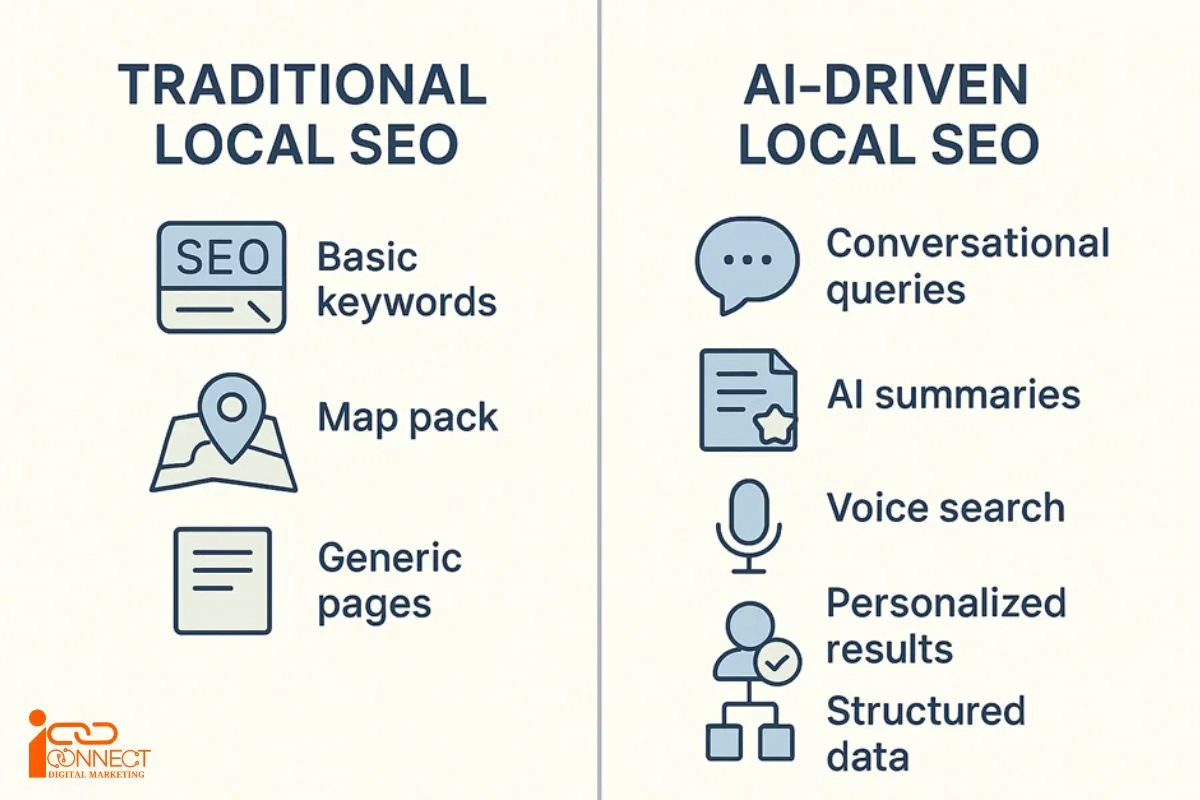
| Aspect | Traditional Local SEO | AI-Driven Local SEO (2026+) |
| Keyword structure | Short keywords | Conversational phrases |
| Ranking signals | Citations, backlinks, maps | Context + intent + entity data |
| Maps visibility | Mostly map pack | AI Overviews + maps + summaries |
| Content style | Generic local pages | Hyper-local, question-answer content |
| Personalization | Minimal | High personalization based on behaviour |
Why AI Makes Local SEO More Competitive
AI rewards content that makes sense to both humans and machines. Local SEO now depends more on:
• Contextual relevance
• User intent
• Structured data
• Trust and reputation signals
• Local engagement
This makes it more of a competitive environment because businesses not only need to be included in online directories, but they need to be understood, trusted and contextually relevant.
FAQs
“Local SEO”: This refers to the process of optimizing the site to ensure that the site can easily be located by those within the region. “Local SEO” is important in that it increases the chances of the site appearing in Google Maps, and other AI-powered results when users search with location intent.
AI now understands natural language and user intent better. This impacts search engine result pages in terms of preferring structured markup information, reviews, conversational pages, and personalized local questions over keyword-optimized pages.
Yes. Reviews help build trust and local credibility. AI models use sentiment and review volume to decide which businesses to recommend in summaries and map results.
Voice searches are more natural. They use entire questions like “Where is a nearby bakery open now?” Local SEO in 2026 must answer these natural language prompts with clear, helpful content.
The list for businesses to act when it comes to local SEO includes: optimization of Google Business Profiles, use of structured data, creation of hyper-local content, use of review activity, and creation of natural language FAQs. This will enable them to feature in the locally generated results produced by artificial intelligence.
Conclusion
Local SEO is developing at a very fast speed. By the end of 2026, AI will be changing the operation of search engines in delivering local search results. Thus, companies that will be adapting localized SEO tactics, such as conversational content creation, voice search optimization, hyper-local targeting, schema markup and online reputation management will remain ahead of the curve.
Local SEO isn’t dying. It’s becoming smarter. AI is changing how people search and how Google can present information through experiences such as AI Overviews and AI Mode. But this does not mean businesses need to abandon established local SEO practices or chase a completely separate form of “AI SEO.”

Mohit Vij is the Founder & Digital Marketing Trainer at iConnect Digital Marketing Training Hub & Agency (iConnectDM), based in Ghaziabad. With over 9+ years of experience in SEO, Google Ads, Meta Ads, Social Media Marketing, Search Intent, Content Marketing, and Lead Generation.
Over the past years, He has trained hundreds of students, job seekers, working professionals in building successful careers in digital marketing while helping businesses improve their search rankings, website traffic, brand visibility, and lead generation. His insights are based on hands-on industry experience, continuous learning, and proven digital marketing strategies that deliver measurable results.