
 Digital Marketing
Introduction
People typically search for information using two primary methods: Paid search or Organic search. Every day, people use search engines like Google or Bing every day to find things they need. It can be answers, products, or services. When someone searches online, many results show up on the screen. Businesses want their website to be there too. If their site appears in search results, more people can find them easily.
You may also be interested in: 👉 What is Search Engine Optimization and How It Works?
Basically, there are two methods that can be used to show up in the results of the search:
- An Organic Search through which websites are naturally ranked due to the provision of helpful content, and
- A Paid Search where businesses pay to have ads displayed at the top.
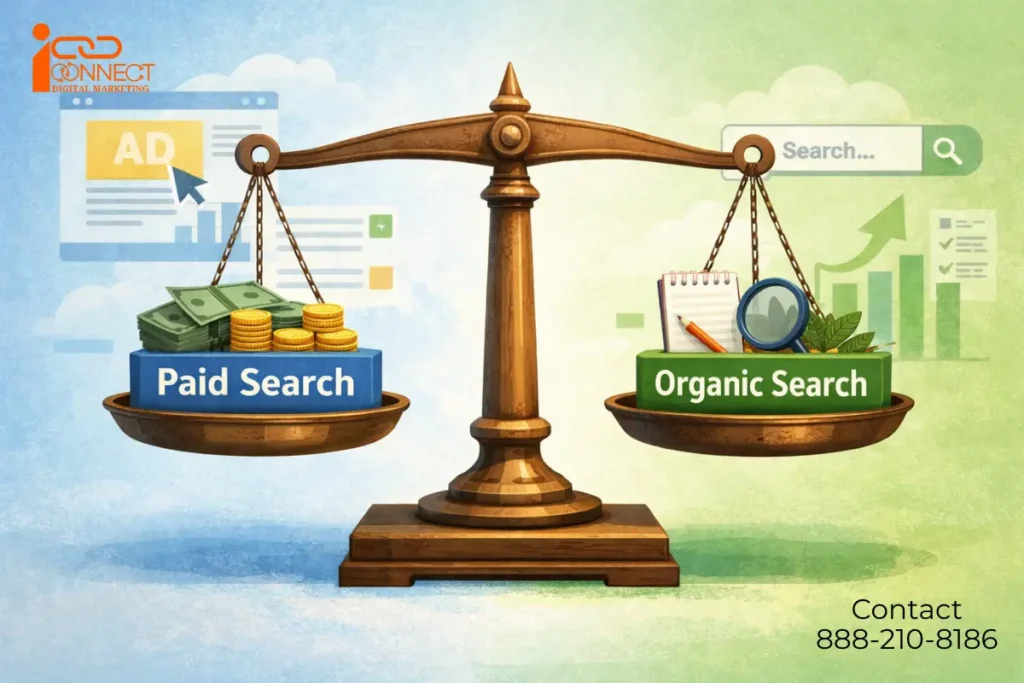
Organic Search is a tool for growth that lasts over a period of time, whereas paid search is a means of getting immediate results. This post features both and also indicates how to maintain a balance between them.
What Is Organic Search?
Organic search means the results you see without ads. The search engine shows these results because they fit the search. It reviews the content, how closely it matches, and whether the site is reliable.
Organic search is not something that can be established overnight. A site has to have good content, the right keywords, and must be updated regularly. It can take quite a while to see the effects of the work done, but if the site is well ranked, it will be able to generate traffic without the need to pay for each click for a long time. Organic search is a core part of SEO services helping businesses improve rankings and visibility naturally over time.
According to BrightEdge research, a well-known SEO research platform, organic search drives about 53% of all website traffic, making it the largest source of online visits (Higo Creative). This really shows how powerful organic search can be. Organic search is very useful. It can do a lot for you. It is amazing to see what organic search is capable of.
For example, if someone searches “how to make chai,” they will mostly click on a blog or recipe page that appears naturally, not an ad. This is organic search in action.
What Is Paid Search?
Paid search is a method where companies pay search engines in order to place their ads on the top of search results. These ads in most cases will be indicated by words like “Sponsored” or “Ad”. Additionally, paid search is known as PPC (Pay, Per, Click) as a company is charged only when a user clicks on the ad.
Paid search is capable of delivering results very quickly. Traffic may start flowing to the site within a few hours after the ad campaign goes live. It is a mode of advertising that is beneficial for new businesses, sales offers, or product launches.
According to Search Engine Land, paid search ads produce about 200% return on investment (ROI) on average, which indicates that businesses are likely to earn more than what they spend (Search Engine Land).
Paid search, however, has its limits. When the money for the ads runs out the ads stop showing. People stop coming to the website. Paid search is not enough, on its own, for a company to keep growing over time. Paid search gives short-term results, not long-term strength.
What are the Key Differences between Paid vs Organic search marketing?
Speed of Results
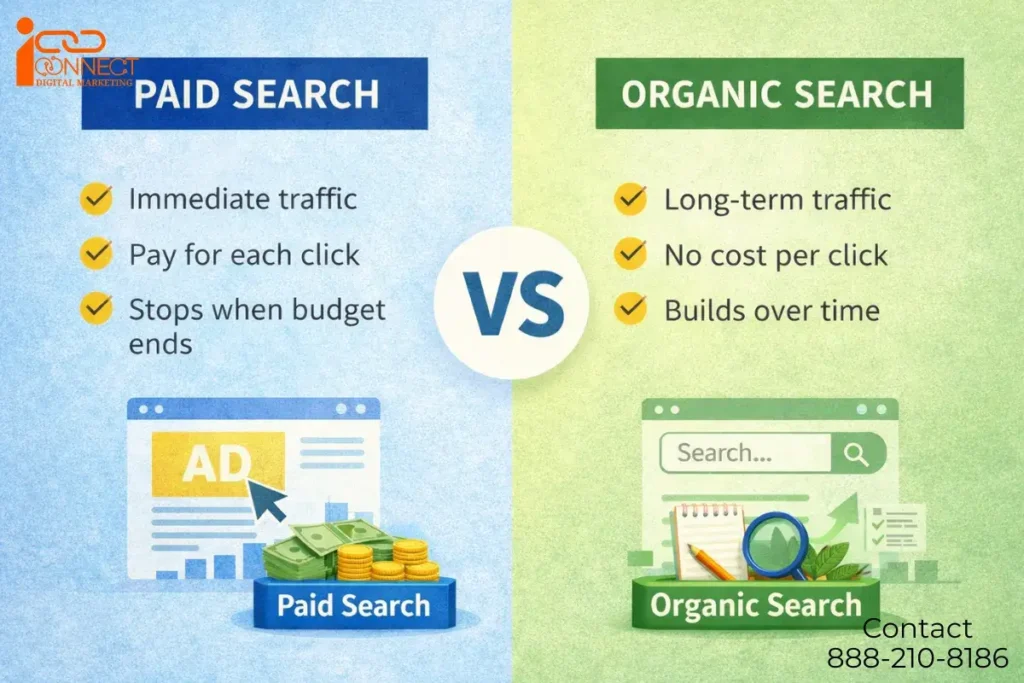
Paid search gives fast results. Ads can appear on Google the same day the campaign starts. This is helpful when a business needs instant visibility.
Organic search is slow. It may take several months to rank well. But once it does, the results stay longer and continue to bring traffic (SEO Rocket).
Cost
Paid search costs money for every click. Therefore, If many people click the ad, the cost increases quickly. This can be expensive for competitive keywords.
Organic search is free from charges for each click. Still, it needs time, some effort, and skills like writing content and working on SEO. Eventually, organic search turns out to be more affordable.
User Trust
Several users trust organic results more than ads. It is known by people that ads are paid, so they often ignore them and go for natural results.
As in studies, organic results get more clicks than paid ads, particularly in the case of informational searches (SEO Rocket).
Traffic and Click Quality
Through organic search, one can have a steady and long term traffic flow. On the other hand, paid search brings you high, intent visitors who are ready to buy or sign up.
In a recent traffic study, organic search made up about 42% of overall website traffic on average, while paid search contributed a much smaller share of around 4.5% (tmnlab.com)
Why Combining Paid and Organic Search Works Best
Using only organic or only paid search is not the best approach. The strongest strategy is to use both together. Therefore, understanding of how paid vs organic search work together is an essential skill for anyone pursuing a Digital Marketing Course in Ghaziabad or managing real-world campaigns.
Paid search is really good at getting people to visit your website fast which is great for websites or when you are having a sale. On the other hand, organic search takes a long time, sometimes several months, to get people to trust your website and think it is a good source of information. Paid search vs. organic search are two methods of driving traffic to a website with paid search being much faster than organic search.
As a result, a company showing in both paid ads and organic results is trusted more by people because it seems more familiar and reliable. So, employing both simultaneously will lead to a rise in traffic and purchases as paid search is a tool for achieving quick results whereas organic search is a way of developing a business over time.
Moreover, to inject a fresh air into their SEO campaign, companies can also run some paid ads which will not only attract more visitors but also help identify the most promising keywords for organic SEO in the future.
How to Maintain a Good Balance Between Paid vs Organic Search
Start With Clear Goals
If the main aim is to generate fast traffic or make quick sales, then paid search would be the tool to use. Whereas, if the goal is to have consistent growth and build brand trust, then more efforts should be put into organic search. Generally, a business cannot do without either of them but needs both eventually.
Use Budget Smartly
Furthermore, do not spend all your money on ads. Start with a small paid budget and see which keywords perform well. At the same time, invest in organic content that can bring traffic for years.
Measure and Learn
Track paid ads to see which ones bring good customers. Use this data to improve organic pages and blog topics. Paid search data is very helpful for SEO planning.
Test and Optimize
Run paid ads to test new keywords or offers. When you see good results, create organic content around those topics. This helps cut down on the money we spend on advertising over time and it also helps get more people to visit our website on their own.
By following these steps, businesses can keep a healthy balance between paid and organic search.
For local businesses in areas like Ghaziabad or Delhi NCR, paid search can bring quick leads, while organic SEO helps build long-term local visibility.
Frequently Asked Questions on Paid vs. Organic Search
A. Both Paid Search and Organic Search play an equally important role. The paid search may generate clicks and traffic quickly and easily. The organic search may build your brand and generate traffic slowly and organically. The perfect solution would be doing both.
A. Organic search does not have a cost associated with advertising. However, there are costs associated with instances like content development, utilization of SEO tools, and time spent doing it. An investment in organic search is typically viewed as a long-term investment rather than as free.
A. Yes, of course. Paid search data can be a great help to SEO performance. When you run Paid Search campaigns, you learn which keywords and worked well for conversion. This information will help you optimize your organic website and SEO strategy.
A. Yes. Certainly you can. There are many examples of analytical tools available from which you can monitor the performance of both paid and organic searches in the same spot, with well-known tools such as Google Analytics and Google Search Console.
A. Paid results are displayed either at the top or at the bottom of the search pages and have a label indicating that they are ads. On the other hand, organic searches will display under paid ads because they have been ranked based on quality and how relevant it is to the search query.
A. These analytical tools collect data on site performance through analysing site traffic, conversion rates and cost of paid advertising.This information can be used by the companies to put more money into the channels that produce better results and to cut down on the ad spending that is not necessary.
In Conclusion,
Both paid and organic search are necessary for growth online. With paid search, a business is able to get quick visibility and immediate traffic. Organic search on the other hand, is about building trust, authority, and getting results that last for a long time. These two are like a team when you use them, they help each other and a strong digital presence is what you get. A wise combination of paid speed and organic power will not only let a business expand now but also be able to keep getting seen later on.
One way to achieve this is to make correct use of Search Engine Optimisation Services. It’s a good idea to hire an SEO service or consultant, considering the fact that a properly planned SEO campaign may help an online business to get a huge amount of visibility and popularity.


